Exploring Stanley Park in Vancouver: A Visitor’s Guide

Stanley Park is one of Vancouver’s most popular places to explore. It combines coastal views, forest trails, beaches, gardens, and family attractions in one large urban park.
You can walk beside the ocean, visit historic landmarks, or enjoy a meal surrounded by nature. The park also offers a peaceful break from the busy streets of downtown Vancouver.
This guide covers the best things to do, where to eat, how to get there, and what to know before visiting in 2026.
Why Visit Stanley Park?
Stanley Park offers something for almost every visitor. Nature lovers can explore forest trails and spot local wildlife. Families can visit the aquarium, enjoy the beaches, and discover the park’s historic sites.
The famous Seawall is another major attraction. It offers beautiful views of the ocean, mountains, and Vancouver skyline. You can explore for an hour or spend an entire day discovering different areas.
Where Is Stanley Park?
Stanley Park sits on the northwestern edge of downtown Vancouver in British Columbia, Canada. It is close to the West End, Coal Harbour, and English Bay.
The main entrance is near the western end of Georgia Street. You can reach the park on foot, by bicycle, by public transit, or by car.
Stanley Park address: Stanley Park, Vancouver, BC, Canada. Individual attractions have their own addresses, so check the destination before travelling.
You can use the official Stanley Park directions and map to plan your route.
How Big Is Stanley Park?
Stanley Park covers approximately 400 hectares, or about 1,000 acres. Its large area includes coastal paths, wooded trails, beaches, gardens, and recreation spaces. The City of Vancouver describes it as the city’s first and largest urban park.
Its size means you should plan your visit around a few main attractions. Walking the Seawall, visiting the aquarium, and exploring the forest can take several hours.
What to Do in Stanley Park
Walk, Jog, Bike, or Skate the Seawall
The Seawall is one of the park’s best-known attractions. You can walk, jog, cycle, or inline skate along designated sections of the waterfront route.
Follow the signs because pedestrians and cyclists use separate paths in busy areas. Check for temporary closures before setting out.
Learn First Nations History and Culture
Stanley Park has deep connections to the Musqueam, Squamish, and Tsleil-Waututh Nations. Their histories and cultural traditions are an important part of the area.
Visit the totem poles at Brockton Point and read the interpretive signs. Treat these works with respect. Do not climb on them or touch them without permission.
Explore the Trails of Stanley Park
Forest trails offer a quieter alternative to the waterfront. You can walk beneath tall trees and discover peaceful corners away from the busiest paths.
Some trails lead toward Beaver Lake and other natural areas. Wear comfortable shoes and check trail conditions after heavy rain.
Hit the Beaches
Second Beach and Third Beach are popular places to relax by the water. You can enjoy the views, take photos, or have a picnic.
Second Beach also has an outdoor swimming pool that operates seasonally. Check current opening dates before planning a swim.
Spot Native Plants and Animals
The park contains forests, wetlands, and rocky shorelines. Look for native trees such as western red cedar and Douglas fir.
You may also spot birds, squirrels, and other local wildlife. Keep a respectful distance and never feed wild animals.
Where to Eat in Stanley Park
You can find sit-down restaurants, cafés, and seasonal food stands throughout the park. Options range from casual snacks to meals with ocean views.
The Teahouse is known for its setting near Ferguson Point. Stanley Park Brewing offers a casual dining experience near Second Beach. Stanley’s Bar & Grill is another option inside the historic Pavilion building. Check current hours before visiting because schedules can change.
How to Get to Stanley Park
You can reach Stanley Park in several ways:
- Public transit: Vancouver’s bus routes connect the downtown area with the park. Check current TransLink schedules before travelling.
- Walking: Enter from downtown or approach along the waterfront from nearby neighbourhoods.
- Cycling: Ride into the park using designated routes and follow posted cycling rules.
- Driving: Follow West Georgia Street toward the main park entrance.
Allow extra time during summer weekends and major events. The roads and paths can become busy.
Things to Do in Stanley Park, Vancouver
There is more to explore than the famous Seawall. You can combine nature walks with cultural landmarks, family attractions, and places to eat.
For a short visit, focus on the Seawall and Brockton Point. If you have a full day, add the aquarium, a beach stop, and a forest trail.
Discover the Stanley Park Seawall
The Seawall gives visitors a scenic way to experience Vancouver’s coastline. It passes beaches, viewpoints, rocky shorelines, and landmarks.
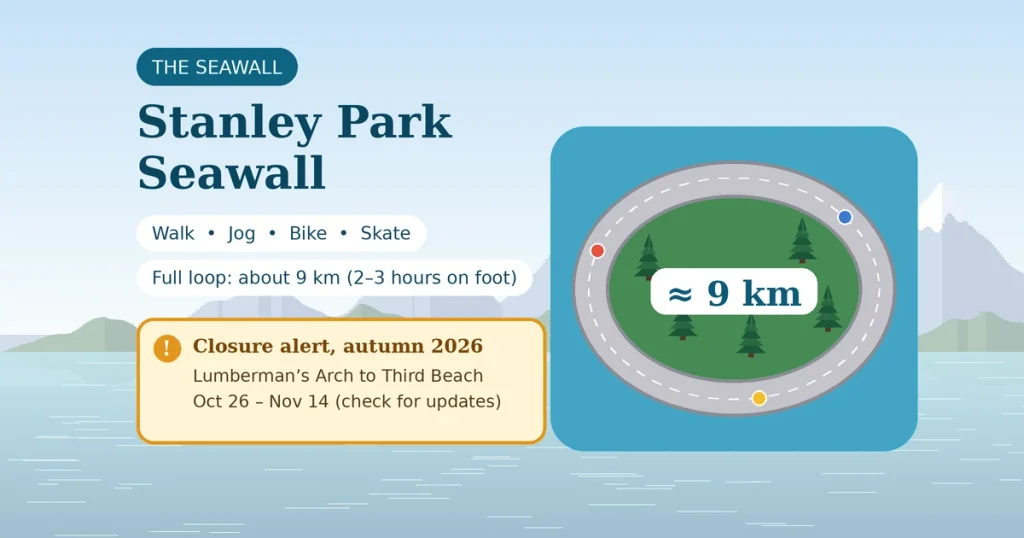
You can walk a short section or plan a longer route around the park. The full loop around Stanley Park is roughly 9 kilometres, although your total distance will depend on detours and side trips.
Important for autumn 2026: The City has announced a closure between Lumberman’s Arch and Third Beach from October 26 through November 14. Intermittent closures may continue until November 20. Follow posted detour signs and check the official Seawall update before visiting.
Explore Walking Trails and Lush Gardens
Walking Trails
Forest paths let you experience the park’s natural side. Some routes are relatively easy, while others include uneven ground or gentle slopes.
Choose a trail that matches your fitness level and available time. Bring water and stay on marked paths to protect the surrounding habitat.
Lush Gardens
Stanley Park has several attractive gardens with seasonal flowers and landscaped paths. The Rose Garden is a popular stop, especially during the warmer months.
Spring and summer are good times to see many flowers in bloom. You can also enjoy the gardens during quieter walks in autumn.
Visit Historic Landmarks
Stanley Park combines natural scenery with historic and cultural sites. Leave time to stop at a few landmarks rather than rushing through the park.
Indigenous Heritage
The Brockton Point totem poles are among the park’s best-known cultural attractions. They represent Indigenous artists, communities, and stories.
Read the signs to learn more about the individual works. Remember that totem poles are cultural artworks, not playground equipment.
Other Notable Landmarks
Siwash Rock is a striking rock formation beside the water. Prospect Point offers views toward Lions Gate Bridge, while Lost Lagoon and Beaver Lake provide different natural settings.
The Hollow Tree is another famous landmark. Check the official park map to plan a route that connects the places you most want to see.
Family-Friendly Activities and Attractions
Stanley Park is a good choice for families because it offers outdoor activities and indoor attractions. You can adapt your visit to children’s ages and the weather.
Vancouver Aquarium
The Vancouver Aquarium is a major attraction within Stanley Park. Visitors can learn about marine life, conservation, and aquatic ecosystems through exhibits and educational experiences.
Admission is separate from park entry. Aquarium tickets vary by date, and advance booking is recommended because daily capacity can be limited. Check the official aquarium ticket page for current prices and availability.
Playgrounds and Water Parks
Children can enjoy outdoor play areas and seasonal water activities. Second Beach is a useful place to plan a family break, especially during warmer weather.
Check seasonal opening information before travelling. Bring towels, spare clothes, and sun protection if you plan to spend time near the water.
Train and Carriage Rides
The miniature railway has traditionally offered a short ride through a wooded section of the park. However, the Stanley Park, Vancouver train attraction is currently suspended because of safety concerns involving its aging systems.
If you’re searching for a Harry Potter-themed train experience, note that the Stanley Park miniature train is not a Harry Potter attraction. Its historic railway theme is separate from the fictional world of the books and films.
Dining and Refreshments in Stanley Park
Picnic Options
A picnic is an easy way to enjoy the park without planning a restaurant visit. Bring sandwiches, fruit, water, and a blanket.
Choose an appropriate picnic area and take all rubbish with you. Avoid feeding birds and other wildlife.
Restaurants and Cafés
For a sit-down meal, consider The Teahouse, Stanley Park Brewing, or Stanley’s Bar & Grill. Café and concession options can be seasonal.
If you want a wider choice of restaurants, explore nearby Denman Street or English Bay. Check menus, hours, and reservation requirements before heading out.
Plan Your Visit to Stanley Park
A little planning can help you make the most of your day.
Entry Fees and Tickets
Entry to Stanley Park itself is free. You do not need a general admission ticket to visit its beaches, public trails, gardens, or Seawall.
Some activities have separate charges. These may include the Vancouver Aquarium, bike rentals, the outdoor pool, golf, and food. The miniature train is currently suspended, so check its official status before looking for tickets.
Parking at Stanley Park
Paid parking is available in designated lots and spaces around the park. Rates vary by season and location.
The current published rates are C4.25perhourfromOctoberthroughMarchandC4.75 per hour from April through September. Daily maximums may apply. Check signs and the official parking information before leaving your car.
Best Time to Visit
Late spring through early autumn is popular for walking, cycling, gardens, and beach visits. Summer brings longer days but can also mean larger crowds.
Spring offers seasonal flowers, while autumn brings cooler weather and changing colours. Winter visits can still be enjoyable, but expect rain and check current path conditions.
Suggested One-Day Itinerary
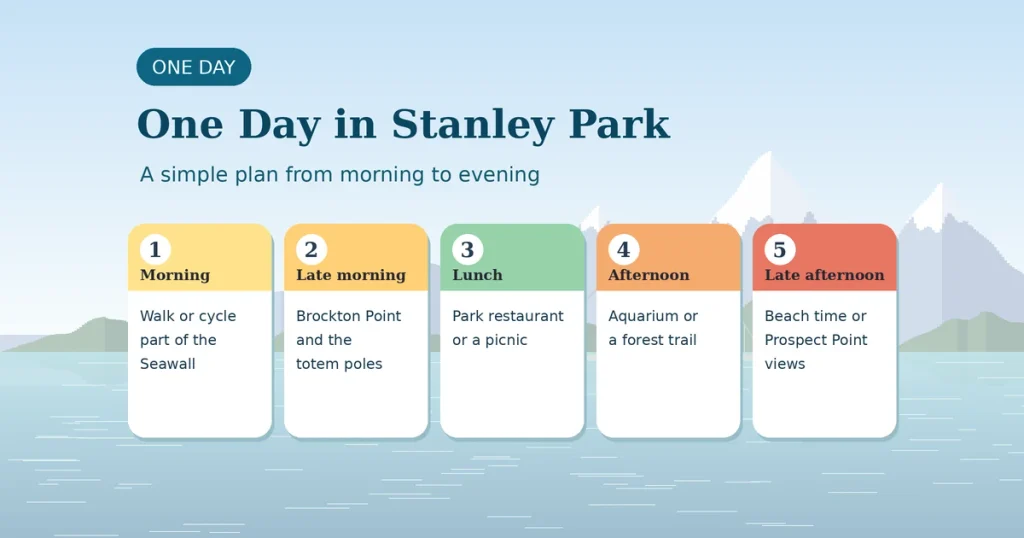
- Morning: Walk or cycle part of the Seawall.
- Late morning: Visit Brockton Point and see the totem poles.
- Lunch: Eat at a park restaurant or enjoy a picnic.
- Afternoon: Visit the Vancouver Aquarium or explore a forest trail.
- Late afternoon: Relax at a beach or enjoy the views near Prospect Point.
Adjust the route to suit your interests and mobility needs. Check current closures before setting off.
Conclusion
Stanley Park is one of Vancouver’s standout attractions. It brings together coastal scenery, forest trails, cultural landmarks, beaches, and family activities in one accessible destination.
Plan your route, check the latest operating information, and choose a few attractions that interest you most. Whether you spend two hours or a full day here, Stanley Park offers a memorable way to experience Vancouver.
Frequently Asked Questions
What Is So Special About Stanley Park in Vancouver?
Stanley Park is special for its waterfront Seawall, rainforest trails, beaches, Indigenous cultural landmarks, gardens, and Vancouver Aquarium.
How Long Does It Take to Walk Around Stanley Park in Vancouver?
Walking the roughly 9-kilometre Seawall loop often takes about two to three hours, depending on your pace and stops.
Do You Have to Pay to Get Into Stanley Park, Vancouver?
No. Entry to the park is free, but parking and certain attractions, including the Vancouver Aquarium, cost extra.
How to Spend a Day in Stanley Park, Vancouver?
Walk the Seawall, visit the totem poles, explore a forest trail, enjoy lunch, and spend time at the aquarium or a beach.