
Sendai Daikannon: The Ultimate Guide to Japan’s Colossal White Bodhisattva
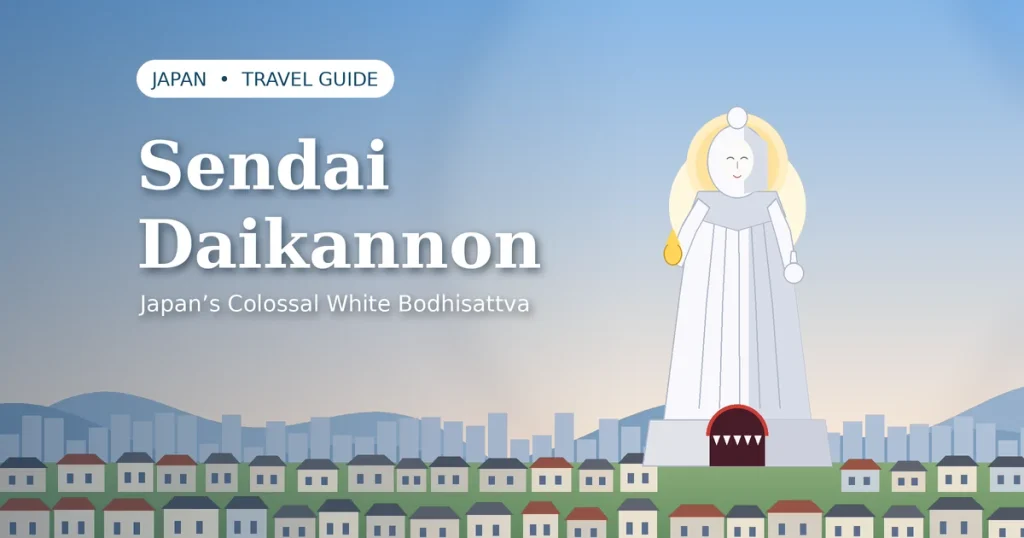
Sendai Daikannon is one of Japan’s most striking landmarks. This giant white Buddhist statue stands in Sendai, Miyagi Prefecture. Its huge size makes it visible from several parts of the city.
The statue is more than a photo spot. Visitors can enter its interior, explore Buddhist figures, and enjoy views of the surrounding area. This guide covers its history, design, spiritual meaning, ticket prices, and travel tips for 2026.
About the Sendai Daikannon
Sendai Daikannon stands on the grounds of Daikanmitsuji Temple in Sendai. Its full name is Sendai Tendou Byakue Daikannon. It represents Byakue Kannon, a Buddhist bodhisattva associated with compassion.
The statue was completed in 1991. Its 100-meter total height commemorates Sendai’s centenary as a city. The structure also extends 21 meters below ground, symbolising hopes for prosperity in the 21st century.
The Scale and the Sight: A Colossal White Figure
The Sendai Daikannon statue stands out because of its bright white exterior and enormous scale. It rises above a residential area on the edge of Sendai. The contrast between the statue and nearby homes makes it especially memorable.
The best views come from outside the temple grounds and nearby streets. Step back to capture the full figure in your photos. The area near the Sendai Daikannon-mae bus stop is a useful place to start.
The Kannon’s Divine Purpose and Symbolism
Kannon represents compassion in Japanese Buddhism. The figure is shown holding a wish-fulfilling jewel in her right hand. Her left hand holds a vessel associated with the water of wisdom.
The temple’s entrance also has religious meaning. It is shaped like a dragon’s mouth and represents good fortune and success. Visitors can pause to reflect on these symbols before entering.
Entering the Dragon’s Mouth: Symbolism and Structure
The entrance is designed to look like an open dragon’s mouth at the statue’s feet. This unusual feature is one of the first things visitors notice. It also represents an auspicious gateway into the statue.
Inside, the structure contains several levels with Buddhist figures and religious displays. Visitors can explore these areas as part of a short pilgrimage-style visit. Follow the signs and instructions provided by temple staff.

The Entrance and Preparation
Before entering, check the admission fee and opening hours. The temple changed its entrance fee in January 2026. Visitors aged 13 and older pay ¥500 to enter the statue’s interior.
Wear comfortable shoes and allow enough time for the visit. The interior route includes stairs and walking areas. Keep your belongings secure and follow any instructions at the entrance.
The Internal Journey and Routes
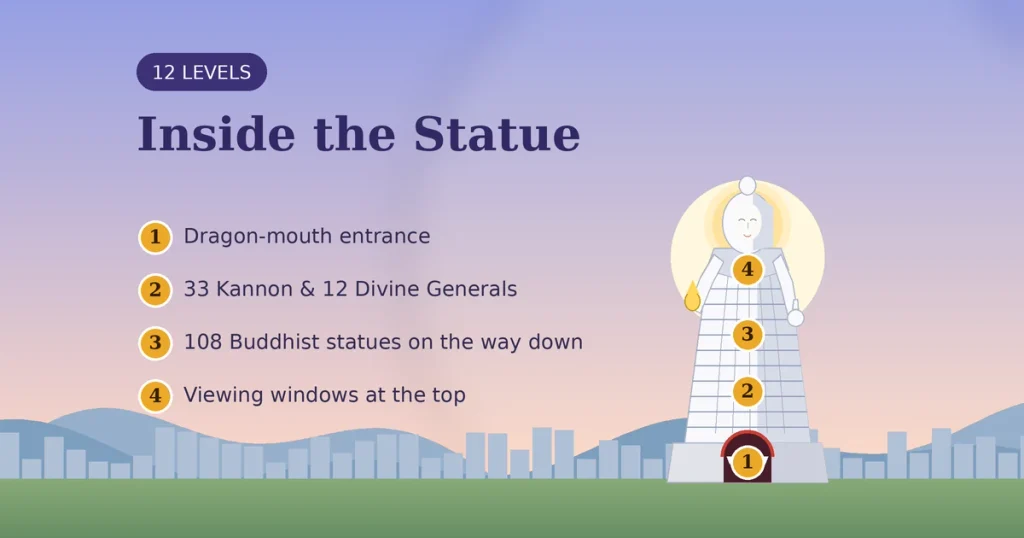
The interior has 12 levels. Visitors can use an elevator to reach the upper level before following the designated route down. The journey includes Buddhist figures, displays, and viewing windows.
Take your time as you explore. Some areas are intended for worship, so keep your voice low and behave respectfully.
The Standard Route (General Visitors)
Most visitors enter through the dragon-shaped entrance and begin on the first floor. The route includes the 33 Kannon figures and the Twelve Divine Generals. An elevator helps visitors reach the upper level.
After reaching the upper level, visitors follow the designated descent route. Look for the 108 Buddhist statues along the way. Follow staff directions if any section is temporarily closed.
Accessibility Notes
The interior route includes stairs and ramps. This may make the visit difficult for people with limited mobility. The elevator provides access to an upper level, but it does not necessarily make every part of the route step-free.
If you use a wheelchair or need mobility assistance, contact the temple before travelling. Ask which areas are accessible and whether staff can offer suitable guidance.
Inside the Statue: The Journey Up and Down
Inside Sendai Daikannon, you’ll find more than a large empty space. The levels contain religious figures and displays linked to Buddhist beliefs. The experience combines architecture, worship, and cultural discovery.
Allow around an hour for a relaxed visit. You may need more time if you stop to study the figures or enjoy the views. The total time also depends on visitor numbers and access conditions.
The 1st Floor Figures: 33 Kannon and the 12 Divine Generals
The first floor features several important Buddhist figures. These include the 33 Kannon and the Twelve Divine Generals. Their placement introduces visitors to the statue’s religious purpose.
Take a moment to look at the different forms and details. Each group has its own place within Buddhist tradition.
33 Kannon (三十三観音)
The 33 Kannon represent different forms through which Kannon can respond to the needs of living beings. Their presence connects the monument to a wider tradition of Kannon worship.
The figures also show the variety of Buddhist artistic styles. Observe their expressions and poses as you move through the display.
12 Divine Generals (十二神将)
The Twelve Divine Generals are guardian figures associated with the Medicine Buddha tradition. They are often linked to the twelve zodiac signs in Japanese Buddhist practice.
Visitors may enjoy learning which general is associated with their birth year. Treat this as a cultural feature rather than a replacement for the temple’s religious meaning.
Ascending to the Top
The upper level offers a different perspective on the monument. Visitors can look through viewing windows across Sendai and the surrounding landscape. On clear days, the view may extend towards the Pacific Ocean.
Take a moment to enjoy the view before starting the descent. Visibility depends on the weather, so ocean views are not guaranteed.
The Descent and the 108 Buddhist Statues
The descent leads visitors through levels containing rows of Buddhist figures. The displays create a quieter atmosphere than the view outside. They also help explain the spiritual ideas behind the monument.
Move carefully and give other visitors space. Follow the marked route instead of entering restricted areas.
The 108 Buddhist Statues (百八胎内仏)
The statue contains 108 Buddhist figures across several levels. In Buddhist tradition, the number 108 is associated with worldly desires or afflictions that people seek to overcome.
The figures are arranged in display spaces along the interior route. Look closely at their differences rather than rushing past them. Each statue adds to the monument’s religious character.
Taking a Break
Pause when you reach a suitable resting area. The interior route may involve walking, stairs, and changes in elevation. Give yourself time if you want to explore every level.
Do not assume food or drink is available inside the statue. Bring water for your wider day trip and check the temple’s rules before eating on the grounds.
The Temple Ground
The grounds offer more to see than the giant statue. Visitors can explore the main hall and other religious features. These areas provide useful context for understanding the temple.
Keep the grounds clean and respect people who are there to pray. Photography rules may differ between outdoor areas and indoor worship spaces.
The Main Hall (本堂)
The main hall is an important place of worship within Daikanmitsuji Temple. It gives visitors another way to experience the site beyond the large statue.
Pause to observe the building and its religious details. If you want to pray, follow the posted guidance and the example of other visitors.
The Oil-Pouring Daikokuten (Aburakake Daikokuten)
The grounds also feature Aburakake Daikokuten, a deity associated with good fortune. Visitors pour oil over the figure as part of a local worship practice.
The custom is linked to blessings for relationships and personal connections. Follow the temple’s instructions if you wish to take part.
Practical Tips for Your Visit
A little planning can make your visit easier. Check the temple’s official website before setting out because opening times and access details may change.
Allow time for transport and the interior route. If you plan to visit other Sendai attractions on the same day, check their locations before arranging your schedule.
Amenities and Time
The temple’s published information lists weekday last entry at 3:00 p.m. and weekend or public-holiday last entry at 3:30 p.m. The admission fee for visitors aged 13 and older is ¥500 from January 1, 2026.
Arrive early enough to enter before the last admission time. Check the official website for any temporary closures or changes. Allow about an hour for the visit, especially if you want to explore the interior slowly.
Access and Directions
The temple is located at 31-36 Nakayamaminami, Sanezawa, Izumi-ku, Sendai, Miyagi Prefecture. From JR Sendai Station, you can take a local bus towards the Sendai Daikannon-mae stop. Check the current route and departure times before leaving.
If you are travelling by taxi, allow extra time for traffic. The journey is usually shorter by car than by bus, but actual travel time varies.
Essential Visitor Information
If you are checking Sendai Daikannon tickets, the current published admission fee for visitors aged 13 and older is ¥500. The fee covers entry into the statue’s interior. Confirm the latest details on the official temple website.
For the Sendai Daikannon price, remember that transport and any other activities are separate costs. Bring some Japanese yen and check whether other payment methods are accepted before visiting.
Sendai Daikannon Height
The Sendai daikannon height is 100 meters when measured with its base. The statue itself is about 92 meters tall. Its full height makes it taller than the Statue of Liberty, measured from the ground to the torch at about 93 meters.
Sendai Daikannon: How Was It Built?
Construction began in the late 1980s, and the monument was completed in 1991. Its design includes a multi-level interior with religious displays and viewing windows.
The project was built to mark Sendai’s centenary and express hopes for the city’s future. Its height and underground depth both carry symbolic meaning.
What Is Sendai Daikannon Made Of?
The structure is made from reinforced concrete. Its exterior has a white finish that gives the figure its distinctive appearance. The material allows the huge structure to contain interior levels as well as religious displays.
Sendai Daikannon vs. Statue of Liberty
The Sendai Daikannon vs. Statue of Liberty comparison often focuses on height. Sendai Daikannon reaches 100 meters including its base. The Statue of Liberty measures about 93 meters from the ground to the tip of its torch.
Both landmarks are instantly recognisable, but they have different purposes. Sendai Daikannon is a Buddhist monument and place of worship. The Statue of Liberty is a monument associated with freedom and the history of the United States.
Sendai Daikannon from Tokyo
To visit Sendai Daikannon from Tokyo, take the Tohoku Shinkansen to Sendai Station. The train journey usually takes around 90 minutes to two hours, depending on the service.
From Sendai Station, continue by local bus or taxi to the statue. Check train and bus schedules before travelling, especially if you plan to return to Tokyo on the same day.
Conclusion
Sendai Daikannon is a memorable stop for visitors interested in Japanese culture, architecture, and Buddhist traditions. Its 100-meter height makes it easy to recognise, while the interior reveals a quieter world of religious figures and displays.
Plan your visit around the temple’s opening hours and current admission fee. Take time to explore the grounds, enjoy the views, and learn about the symbolism behind this remarkable landmark.