
Sydney Harbour Bridge 2026 | Dimensions, Location, History, & Facts
The Sydney Harbour Bridge is one of Australia’s most famous landmarks. It connects Sydney’s central business district with the North Shore. Its giant steel arch stands above the harbour and offers amazing views of the city.
Visitors can cross the bridge on foot, cycle along its dedicated path, or join a guided climb. You can also explore the Bridge Museum inside its southeastern pylon. This guide covers the bridge’s history, height, design, activities, and visitor information for 2026.
What Is the Sydney Harbour Bridge, and How Does It Work?
The Sydney Harbour Bridge is a steel arch bridge in Sydney, New South Wales. It carries road traffic, trains, bicycles, and pedestrians across the harbour. Locals often call it the “Coathanger” because of its curved shape.
The steel arch supports the bridge deck through vertical hangers. Its design distributes weight through the arch and into the foundations on each shore. This structure helps the bridge carry heavy traffic every day. (Australian Government heritage listing)
History of the Sydney Harbour Bridge
The idea of building a bridge across Sydney Harbour dates back to the early 1800s. Before its construction, people relied on ferries or long road journeys to travel between the city and the northern suburbs.
Construction began in the 1920s, and the bridge officially opened on 19 March 1932. The project created jobs during the Great Depression and changed how people travelled around Sydney. It also became a lasting symbol of Australian engineering. (National Museum of Australia)
Key Figures and Stories
Engineer John Job Crew Bradfield played a major role in planning the bridge. His vision included a harbour crossing that would support roads, railways, and Sydney’s future growth.
The opening ceremony also produced an unusual story.
Before the official ribbon-cutting, Francis de Groot rode forward and cut the ribbon with his sword. His action was a political protest against the government’s decision to open the bridge without a royal representative.
Impact on Sydney’s Development
The bridge made travel between the two sides of the harbour much easier. It helped connect residential areas with the city centre and supported the growth of northern Sydney.
Today, it remains an important transport route. Trains, cars, cyclists, and pedestrians use the crossing. It also attracts visitors from around the world and plays a major role in Sydney’s public celebrations.
Construction of the Sydney Harbour Bridge
Construction took about eight years and involved thousands of workers across the wider project. The bridge required detailed planning, careful steelwork, and major engineering efforts.
The main arch was built from both shores. Workers gradually extended each half toward the centre until the two sides met in August 1930. The bridge deck and transport systems were then completed before the public opening in 1932. (Museum of History NSW)
Engineering Challenges
Building across a busy harbour presented major challenges. Engineers had to account for wind, temperature changes, heavy loads, and the difficult work of assembling a huge steel arch.
The two halves needed to meet accurately in the centre. Workers used large cranes and steel cables to control the structure during construction. The final connection was a major milestone in the project.
Materials and Techniques
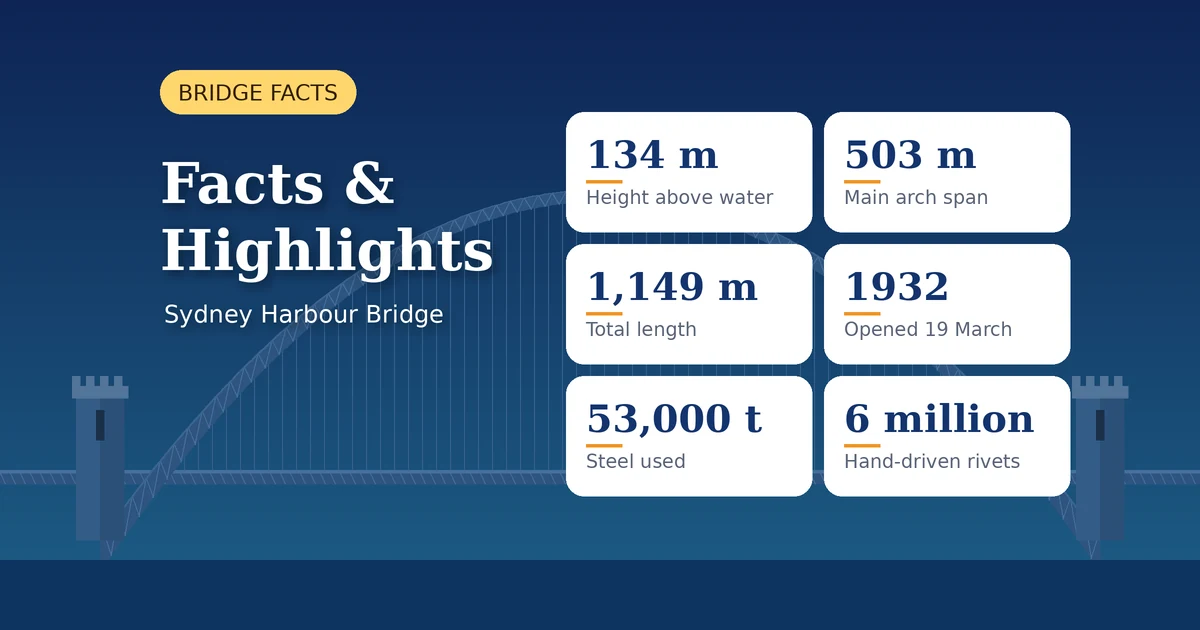
The bridge used about 53,000 tonnes of steel and around six million hand-driven rivets. The steel arch supports the road and rail deck below it.
The four stone pylons give the bridge its distinctive appearance. They were built using granite quarried near Moruya on the New South Wales South Coast. The pylons are mainly decorative and do not carry the arch’s main structural load. (BridgeMuseum history)
Key Milestones
Several dates mark important stages in the bridge’s development:
- 1923: Work began on the bridge approaches.
- 1925: Construction of the main bridge structure began.
- 19 August 1930: The two halves of the arch joined.
- 1931: The bridge deck was completed.
- 19 March 1932: The bridge officially opened.
- 2007: The bridge was added to Australia’s National Heritage List.
These milestones show how a long-standing idea became a working transport link and a national landmark.
Sydney Harbour Bridge Facts & Highlights
The bridge combines practical transport functions with a striking design. It is still one of the most recognisable features of Sydney’s skyline.
Here are some useful facts to remember:
- Height: The summit reaches about 134 metres above the water.
- Arch span: The main arch spans 503 metres.
- Total length: The bridge measures about 1,149 metres.
- Opening date: 19 March 1932.
- Materials: Around 53,000 tonnes of steel and six million rivets.
- Nickname: The Coathanger.
The bridge also offers views of the Sydney Opera House, Circular Quay, and the surrounding harbour. (NSW Government visitor guide)
Cultural Significance
The bridge is part of Sydney’s identity. Its image appears in travel campaigns, photographs, films, and major public celebrations. It is especially famous during the city’s New Year’s Eve fireworks.
It also represents a major period in Australia’s engineering history. The bridge’s design and construction helped shape the city’s transport network. Today, it remains both a working crossing and a popular visitor attraction.
Things to Do When Visiting the Sydney Harbour Bridge
There are several ways to experience the bridge. You can cross it on foot, take photos from nearby parks, visit the BridgeMuseum, or book a guided climb.
You do not need to buy a ticket to enjoy the public pedestrian walkway. Paid activities provide extra experiences, such as exhibitions or access to the upper arch.
Best Times to Visit
Early morning is a good time for a quieter walk and softer light. Late afternoon can offer warm colours over the harbour. Sunset is popular, so expect more visitors at well-known viewpoints.
Check the weather before heading out. Strong winds or storms may affect outdoor activities or access to certain areas. If you book a climb, follow the operator’s instructions for your selected time.
Popular Viewpoints and Photo Spots
You can take memorable photos of the bridge from several locations around the harbour. Each viewpoint offers a different angle.
Consider these popular spots:
- Circular Quay: Good for combining bridge views with the Opera House.
- The Rocks: Historic streets provide interesting foregrounds.
- Milsons Point: Offers a close view of the arch from the northern side.
- Bradfield Park: A popular place to photograph the bridge and harbour.
- Luna Park area: Useful for wide views of the bridge from the North Shore.
The pedestrian walkway also provides views from the bridge itself. Keep moving when the path is busy and avoid blocking other pedestrians.
Daytime Activities and Tours
A free option is to walk across the bridge. The pedestrian path connects The Rocks on the southern side with Milsons Point on the north. The crossing usually takes around 15 to 30 minutes, depending on your pace and photo stops.
You can also join a guided walking tour or visit the BridgeMuseum. For a different perspective, take a ferry beneath the arch. These activities offer ways to enjoy the bridge without taking part in a full climb.
Bridge Climb Experience
BridgeClimb lets visitors reach the upper arch with a trained guide and safety equipment. The experience includes a briefing, suitable climbing gear, and panoramic views from high above the harbour.
The operator offers several options, including daytime, twilight, night, and special cultural climbs. The standard summit experience involves about 1,332 steps. The full experience often takes around two to three and a half hours, depending on the route. (Official BridgeClimb website)
Sydney Harbour Bridge Climb Tickets and Prices
Climb prices change with the date, time, and demand. Published starting prices for 2026 include:
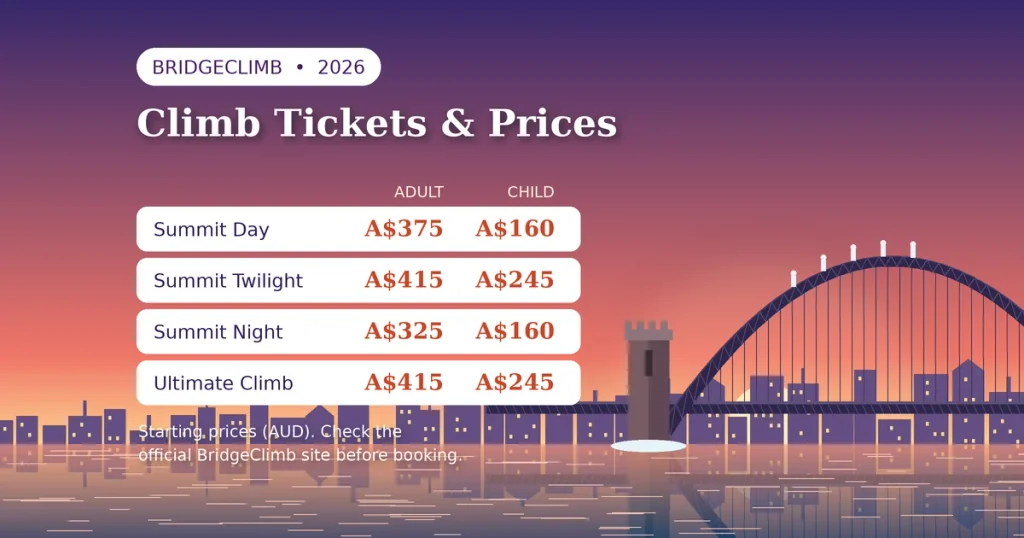
- Summit Day: adults from A375andchildrenfromA160.
- Summit Twilight: adults from A415andchildrenfromA245.
- Summit Night: adults from A325andchildrenfromA160.
- Ultimate Climb: adults from A415andchildrenfromA245.
These are starting prices, not guaranteed quotes. Check the official BridgeClimb prices page before booking. Children must meet the operator’s age and height requirements.
Can You Walk Across the Bridge for Free?
Yes. The public pedestrian walkway is free to use, so you can enjoy the views without buying a climbing ticket. Follow the signs to the walkway and stay within the designated pedestrian area.
The guided climb is a separate paid activity. Choose it if you want to reach the summit and experience the bridge’s steel arch from above.
Sydney Harbour Bridge Museum
The former Pylon Lookout has been redeveloped as the Sydney Harbour BridgeMuseum. It is located inside the southeastern pylon and explores the bridge’s design, construction, and cultural importance.
The museum features historic objects, interactive displays, and a viewing platform called SkyHouse. The climb to the top includes about 200 steps, so allow time for the visit. (Official BridgeMuseum website)
BridgeMuseum Tickets and Opening Hours
For 2026, general admission starts at A39.95foradultsandA22.95 for children aged 3 to 15 when booked online. Walk-up tickets cost more, and prices can change during peak periods.
The museum generally opens daily, with seasonal hours. Check the official visitor information for current opening times, ticket availability, and access details.
Conclusion
The Sydney Harbour Bridge is more than a transport route. It is a landmark with a remarkable history, bold engineering, and some of the best views in Sydney.
You can enjoy it for free on foot, learn more inside the BridgeMuseum, or book a climb for a higher view. Check official ticket prices and opening times before your visit. This will help you plan a smooth and memorable Sydney experience.
BRIDGE FAQs
Why is Sydney Harbour Bridge so famous?
It is famous for its huge steel arch, its role in Sydney’s transport network, and its views of the harbour and Opera House. It is also a key symbol of Australia.
How much longer will the Sydney Harbour Bridge last?
There is no confirmed end date for the bridge’s service life. Regular inspections, maintenance, and repairs help keep it safe and operational.
Can you climb the Sydney Harbour Bridge for free?
No. The guided BridgeClimb experience requires a paid ticket. However, walking across the public pedestrian path is free.