
Best Travel Exercises Portable: 15 Easy Workouts
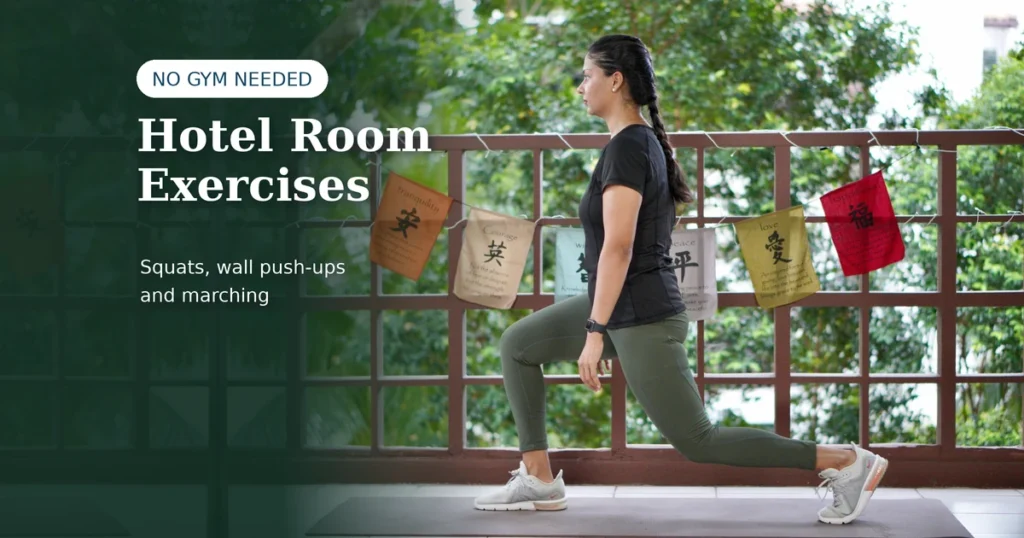
Travel can interrupt your fitness routine. Long flights, busy schedules, and small hotel rooms can make exercise harder. But you don’t need a gym to stay active.
The best travel exercises portable routines use body weight, resistance bands, and simple movements. You can do many of them in a hotel room, at a park, or during a road trip stop.
This guide covers 15 easy exercises, compact equipment, and a simple weekly plan. You’ll also learn how to stay active during flights, airport layovers, and sightseeing days.
Why Portable Exercises Are Useful During Travel
Portable workouts help you stay active when your usual gym isn’t available. They also make it easier to maintain a routine during holidays and business trips.
You can exercise without buying a gym membership or carrying heavy equipment. A few minutes of movement can also break up long periods of sitting.
Adults should aim for at least 150 minutes of moderate aerobic activity each week. They should also do muscle-strengthening activities on at least two days.
Best Portable Travel Exercises for Hotel Rooms
Hotel rooms often have limited floor space. Choose exercises that need little room and don’t involve jumping if noise is a concern.
Here are five easy options to get started.
1. Bodyweight Squats
Stand with your feet about shoulder-width apart. Push your hips back and bend your knees as if sitting in a chair.
Stand up slowly and repeat. Keep your back comfortable and use a smaller range of motion if needed.
2. Wall Push-Ups
Face a wall and place your palms against it at shoulder height. Bend your elbows to bring your chest closer to the wall.
Push back to the starting position. This variation is useful for beginners who find floor push-ups difficult.
3. Standing Calf Raises
Stand near a stable wall or chair for support. Lift your heels and rise onto your toes.
Lower your heels slowly. This exercise works your calf muscles and fits easily into a small room.
4. Glute Bridges
Lie on your back with your knees bent and feet flat on the floor. Lift your hips until your shoulders, hips, and knees form a comfortable line.
Pause briefly and lower your hips. Skip this exercise if the floor is unsuitable or the movement causes pain.
5. Marching in Place
Stand tall and lift one knee at a time. Swing your arms naturally as you march.
Start slowly and increase your pace if comfortable. This simple movement adds activity without requiring much space.
Best Travel Exercises Portable With Resistance Bands
Resistance bands are light and easy to pack. They provide resistance for several muscle groups without the weight of traditional gym equipment.
These Portable travel workout equipment options are useful for travelers who want more variety than bodyweight exercises alone.
6. Resistance Band Rows
Sit or stand with the band secured according to its instructions. Pull your hands toward your torso while keeping your elbows close to your sides.
Return slowly to the starting position. Never anchor a band to a loose object or an unstable door.
7. Resistance Band Chest Press
Place the band behind your upper back if the design allows it. Hold an end in each hand and press forward.
Return your hands slowly. Use a light band first and stop if you feel shoulder pain.
8. Resistance Band Biceps Curls
Stand in the center of a suitable band. Hold the handles or ends with your palms facing forward.
Bend your elbows to raise your hands. Lower them slowly without swinging your body.
9. Resistance Band Side Steps
Place a loop band around your thighs or ankles if its instructions allow it. Bend your knees slightly and take small steps sideways.
Keep your movements controlled. Use a band that lets you maintain good balance.
10. Resistance Band Pull-Aparts
Hold a light band in front of your chest with both hands. Keep your arms nearly straight and pull your hands apart.
Bring your hands back together slowly. Avoid shrugging your shoulders or stretching the band beyond its safe range.
Safety tip: Inspect bands for cracks, tears, or worn areas before every workout. Follow the manufacturer’s instructions for anchoring and use.
A Simple 15-Minute Travel Workout
You can combine several exercises into one short session. This routine requires no gym and uses only body weight.
Start with two minutes of easy marching and gentle arm movements. Then follow this plan.
| Time | Exercise | Suggested duration |
| 2–4 minutes | Bodyweight squats | 2 minutes |
| 4–6 minutes | Wall push-ups | 2 minutes |
| 6–8 minutes | Marching in place | 2 minutes |
| 8–10 minutes | Standing calf raises | 2 minutes |
| 10–12 minutes | Glute bridges | 2 minutes |
| 12–15 minutes | Gentle marching and stretching | 3 minutes |
Adjust the pace to match your fitness level. Beginners can take breaks between movements or shorten each exercise.
This routine is a starting point, not a strict prescription. If you feel dizzy, unusually breathless, or experience pain, stop and rest.
Best Travel Exercises Portable for Long Flights
Long flights involve extended periods of sitting. Small movements can help you stay comfortable while seated.
Try these gentle options when the cabin conditions allow them:
- Ankle circles: Move each ankle slowly in both directions.
- Heel and toe raises: Keep your feet on the floor and lift your heels, then your toes.
- Seated knee extensions: Straighten one knee gently, then lower your foot.
- Calf contractions: Tighten your calf muscles briefly and relax them.
- Seated marches: Lift one knee at a time without striking the seat in front of you.
When it’s safe and permitted, stand up and walk along the cabin aisle periodically. Keep your movements within your own space and follow the crew’s instructions.
Movement during travel is particularly important for people concerned about blood clots. If you’ve had a clot before or have other risk factors, ask a healthcare professional about suitable precautions.
Best Travel Exercises Portable for Road Trips
Road trips can involve hours of sitting. Plan regular stops where you can safely get out and move around.
Try these exercises during suitable breaks:
- Walk briskly around a rest area.
- Perform gentle standing calf raises.
- March in place for one or two minutes.
- Do controlled bodyweight squats if you can do them comfortably.
- Stretch your legs gently before getting back in the car.
Never exercise in a live traffic area or where vehicles are moving nearby. Choose a safe, level place away from traffic.
Drivers should stop in a suitable location before leaving the vehicle to exercise. Never attempt workout movements while driving.
Best Travel Exercises Portable for Airport Layovers
Airport layovers offer a chance to move between flights. You don’t need to perform a full workout to benefit from being active.
Walk through the terminal when time and airport rules permit. Choose stairs instead of elevators only if you’re comfortable using them and have enough time.
You can also perform ankle circles and seated heel raises while waiting at your gate. Avoid movements that block walkways or disturb other passengers.
Keep an eye on boarding announcements. A short walk is not worth missing your flight.
Best Travel Exercises Portable for Different Travellers
The right routine depends on your age, fitness level, and travel plans. Choose movements that match your abilities rather than copying someone else’s workout.
Beginners
Start with wall push-ups, easy marching, and supported calf raises. Add more repetitions as the movements become comfortable.
Older Adults
Choose gentle walking, supported standing exercises, and comfortable mobility movements. Portable Exercise Equipment for Seniors can include light resistance bands and small, stable exercise accessories.
Use a secure chair or wall for balance when needed. If you have arthritis, heart disease, or another health condition, ask your healthcare professional which activities suit you.
Business Travellers
Try a short hotel-room circuit before work or after meetings. Resistance bands are useful when you want to train several muscle groups without visiting a gym.
Families
Walking tours, swimming where safe, and exploring parks can help families stay active together. Choose activities that suit everyone’s age and abilities.
Experienced Fitness Enthusiasts
Combine bodyweight exercises with resistance bands. You can also use brisk walks, stairs, or suitable outdoor routes to maintain your usual activity level.
How to Create a Flexible Travel Exercise Routine
A flexible routine is easier to follow than a strict schedule. Plan around your flights, sightseeing, work commitments, and energy levels.
Use three simple steps:
- Set a minimum goal: Decide whether you can manage a 10-minute session or a short walk.
- Choose backup exercises: Keep a bodyweight routine ready for days without a gym.
- Adjust when needed: Reduce the intensity after poor sleep or a tiring travel day.
The goal is to remain consistent without turning your holiday into a demanding training program.
What Portable Exercise Equipment Should You Pack?
You don’t need a suitcase full of fitness gear. A few lightweight items can support many different workouts.
| Equipment | Best use | Packing benefit |
| Resistance bands | Strength exercises | Lightweight and compact |
| Exercise mat | Floor exercises | Optional, but useful |
| Jump rope | Cardio | Small and easy to carry |
| Massage ball | Gentle self-massage | Takes up little space |
| Supportive shoes | Walking and outdoor exercise | Useful for sightseeing too |
This list covers common Portable workout equipment choices. Check the dimensions and airline baggage rules before packing.
Choosing a Portable Home Gym System
A Portable Home Gym System may use resistance cables, bands, handles, or compact attachments. It can offer more exercise options than a single band.
Check the product’s maximum resistance, anchoring requirements, and safety instructions. Avoid equipment that needs a permanent installation if you’re moving between hotels.
For most casual travelers, a simple band set is enough. More advanced equipment makes sense if strength training is a major part of your routine.
How to Compare Travel Workout Equipment
If you’re researching Travel exercises portable reviews, look beyond star ratings. Check durability, resistance levels, weight, packing size, and the quality of the instructions.
Search results for Travel exercises portable Amazon can help you compare prices and customer feedback. However, confirm the exact model and read recent reviews before buying.
You can also explore Travel workout equipment Reddit discussions for practical user experiences. Treat these comments as personal opinions rather than proof that a product is safe or effective.
For many people, the Best portable home gym equipment is the gear they’ll use consistently. A compact set of resistance bands may be more practical than an expensive kit that stays in your luggage.
How to Exercise Without a Hotel Gym
A hotel gym is convenient, but it isn’t essential. You can use bodyweight exercises in your room or walk in a safe public area.
Try a simple combination of squats, wall push-ups, marching, and calf raises. If your room is too small, choose seated exercises or take a walk outdoors when conditions are suitable.
Look for nearby parks, public walking paths, or swimming facilities. Check opening hours and safety conditions before visiting.
Travel Exercise Mistakes to Avoid
Trying to do too much can make exercise harder to maintain. Travel already affects sleep, meals, and daily schedules.
Avoid these common mistakes:
- Doing an intense workout after a sleepless night.
- Using unfamiliar equipment without reading instructions.
- Exercising in a crowded or unsafe space.
- Skipping warm-ups before harder activity.
- Ignoring pain, dizziness, or unusual shortness of breath.
- Carrying more fitness gear than you’ll realistically use.
You don’t need to match your normal workout on every travel day. A gentle walk or rest day may be the better choice.
Weather and Destination Considerations
Your destination affects which exercises are practical. Hot weather can make outdoor workouts more tiring, while cold or wet conditions may limit walking routes.
In hot weather, exercise during cooler hours and drink water regularly. In cold or rainy weather, choose a suitable indoor space.
Check local advice before exercising in areas with poor air quality, extreme temperatures, or difficult terrain. Wear suitable shoes and clothing for the conditions.
Combining Exercise With Sightseeing
Sightseeing is an easy way to add movement to your day. Walking tours, gentle hikes, and exploring city neighborhoods can all contribute to your activity.
Choose a walking route that matches your fitness level. Include breaks for meals, water, and rest.
You can also use stairs where it is safe and practical. Remember that sightseeing should still feel enjoyable, not like a fitness challenge you must complete.
Budget-Friendly Travel Fitness
You can stay active without buying expensive equipment. Walking, bodyweight exercises, and public parks are often free.
A basic resistance band set can add variety if you want to spend a little money. Compare its durability and resistance options before choosing one.
Avoid buying a complete portable gym unless you need its extra features. Your body weight and a comfortable pair of walking shoes may be all you need.
Travel Exercise Safety
Start each session with a gentle warm-up. Increase the intensity gradually and use movements you can control.
Drink water, wear suitable footwear, and choose a stable exercise surface. Never use furniture as workout equipment unless it is designed and positioned safely for that purpose.
People with medical conditions, recent injuries, balance problems, or limited mobility may need individual guidance. Check with a healthcare professional before starting a new routine if you have concerns.
Stop exercising if you experience chest pain, faintness, or severe breathing difficulty. Seek urgent medical care for serious or persistent symptoms.
Example Seven-Day Travel Exercise Plan
This flexible plan combines movement, strength, and recovery. Change the activities to match your schedule and fitness level.
| Day | Activity | Time |
| Day 1 | Brisk sightseeing walk | 20–30 minutes |
| Day 2 | Bodyweight hotel workout | 15 minutes |
| Day 3 | Easy walk and gentle mobility | 15–20 minutes |
| Day 4 | Resistance band workout | 15–20 minutes |
| Day 5 | Walking tour or outdoor activity | 20–30 minutes |
| Day 6 | Short bodyweight circuit | 10–15 minutes |
| Day 7 | Rest or gentle walking | As comfortable |
These times are examples, not requirements. Add activity gradually if you’re new to exercise.
Making Travel Fitness a Long-Term Habit
Consistency matters more than completing a perfect workout. A short routine you can repeat is often more useful than an ambitious plan you abandon.
Keep your equipment in an easy-to-reach pocket of your luggage. Save your favorite exercises on your phone and choose a backup routine for busy days.
Track your activity if it helps you stay motivated. Most importantly, allow yourself to rest when you need it.
Conclusion
The best portable travel exercises are simple, flexible, and easy to repeat. You can stay active with bodyweight movements, resistance bands, walking, and gentle seated exercises. Start with a routine that fits your schedule.
Pack only the equipment you’ll use and adjust your workout to your energy level. Even when travel changes your plans, small amounts of movement can help you maintain an active lifestyle.
FAQs
What Are the Best Portable Travel Exercises for Beginners?
Marching in place, wall push-ups, bodyweight squats, and standing calf raises are simple options for beginners.
Can I Exercise in a Small Hotel Room?
Yes, you can do wall push-ups, squats, marching, and other low-impact movements in a small space.
What Is the Best Portable Exercise Equipment for Travel?
Resistance bands are a practical choice because they’re lightweight, compact, and suitable for several strength exercises.
How Long Should a Travel Workout Be?
A 10–15 minute session can be a useful starting point, but your ideal duration depends on your fitness level and goals.
How Can I Exercise During a Long Flight?
Try ankle circles, heel raises, and gentle seated leg movements, then walk when it’s safe and permitted.
Can Walking Count as Exercise While Traveling?
Yes, brisk walking can count as moderate-intensity aerobic activity when it raises your breathing and heart rate.
Should I Bring Resistance Bands on Vacation?
Bring them if you enjoy strength training and will use them, but they aren’t essential for staying active.
Is It Okay to Skip a Workout While Travelling?
Yes, taking a rest day is fine, especially when you’re tired or recovering from a demanding travel day.
Can I Exercise Outdoors While Travelling?
Yes, choose safe routes and check the local weather, terrain, and conditions before exercising outside.
What Should I Do if I Feel Tired During a Travel Workout?
Slow down or stop, rest, and drink water if appropriate; don’t push through dizziness or unusual symptoms.
What Is the Best Exercise to Do While Traveling?
Walking is one of the easiest choices because it requires little equipment and can fit naturally into sightseeing.
What Is the 3-3-3 Rule for Workouts?
There is no single universal definition; some plans use three exercises, three sets, and three weekly sessions, while others use different formats.
Does Rucking Really Work?
Rucking, or walking with a weighted backpack, increases the effort of walking, but the extra load can strain your joints and back.