
Golden Gai 2026: Everything You Need to Know Before You Visit
Golden Gai is one of the most unusual nightlife areas in Tokyo, Japan. It is famous for narrow alleys, tiny bars, glowing signs, and old wooden buildings. Each bar has its own style and atmosphere.
Whether you’re visiting for the first time or returning to Shinjuku, this guide will help you plan your evening. You’ll learn about cover charges, local etiquette, the best time to visit, and how to find a bar that welcomes you.
What Is Golden Gai?
Golden Gai is a small nightlife district in Shinjuku’s Kabukicho area. It contains around 280 small bars and pubs packed into narrow lanes. Many venues have only a few seats.
Unlike a large nightclub, Golden Gai offers a more personal experience. You can talk with bartenders, meet other visitors, and discover different music styles. Each venue has its own rules, so check the entrance before going inside.
Why Golden Gai Exists
Golden Gai developed after World War II. The area began as a market district in 1947 and later became known for its nightlife. Over time, small bars became a major part of its identity.
The district survived periods of redevelopment that changed much of Shinjuku. Its small buildings and narrow lanes still preserve an older side of the city. Today, locals and international visitors come to experience its unique bar culture.
Is Golden Gai a Tourist Trap?
Golden Gai attracts many tourists, but it is more than a sightseeing stop. It remains a working nightlife district where local owners serve their customers. Some bars welcome newcomers, while others prefer regular guests.
To avoid an uncomfortable experience, check prices before entering. Choose a bar with a visible menu or clear welcome sign. You can enjoy the area without visiting every bar or spending a lot of money.
A Brief History of Shinjuku Golden Gai
The district grew from the postwar market area and changed as Japan’s nightlife developed. During the 1960s and 1970s, its bars attracted writers, editors, filmmakers, and other creative people. This helped build its cultural reputation.
Later, redevelopment threatened the area. Local business owners worked to protect its buildings and community. Today, Golden Gai remains known for its small venues and distinctive atmosphere.
What Golden Gai Bars Are Actually Like
Most bars are tiny, with a counter and a limited number of seats. You may sit close to other guests, so the experience can feel social and intimate. Some places focus on conversation, while others play rock, jazz, or other music.
Don’t expect every bar to serve a full meal. Many focus on drinks and small snacks. If you want dinner first, eat at a nearby restaurant before starting your evening.
Types of Bars You’ll Find
Golden Gai has many different venues. Choosing one that matches your interests can make your visit more enjoyable.
Look at the signs, menus, and entry notices before choosing. If a bar seems full or does not welcome walk-in guests, simply move on to another one.
Tourist-Friendly Bars
Some bars display English menus and welcome international visitors. These are often easier choices for first-time guests who don’t speak Japanese.
Look for prices outside the door and ask about the cover charge. A friendly greeting from the staff can help you feel comfortable before ordering.
Regulars-Only Bars
Some venues serve regular customers or accept newcomers only when introduced by someone they know. Others may limit entry based on space or their own house rules.
Respect these policies rather than trying to persuade the owner to let you in. There are plenty of other places to explore.
Themed Bars
Themed bars may focus on music, films, books, or a particular style. Some have unusual decorations and strong personalities.
Read the signs before entering and check whether the venue welcomes new guests. A small bar can have a very specific atmosphere, so choose one that suits your interests.
Bar-Hopping-Friendly Spots
Some bars are easy for newcomers to visit without a reservation or introduction. These can work well if you want to try more than one venue.
Start with one drink and see how you feel. Since most bars are small, keep your group size low and avoid blocking the entrance.
How Cover Charges Work
Many Golden Gai bars charge a seating fee or otōshi-dai in addition to drinks. The official district guide gives a typical range of around ¥500 to ¥1,500, although each bar sets its own rules.
Ask about the cover charge before sitting down. Check drink prices too, especially if the bar has no visible menu. This simple step helps you avoid surprises when the bill arrives.
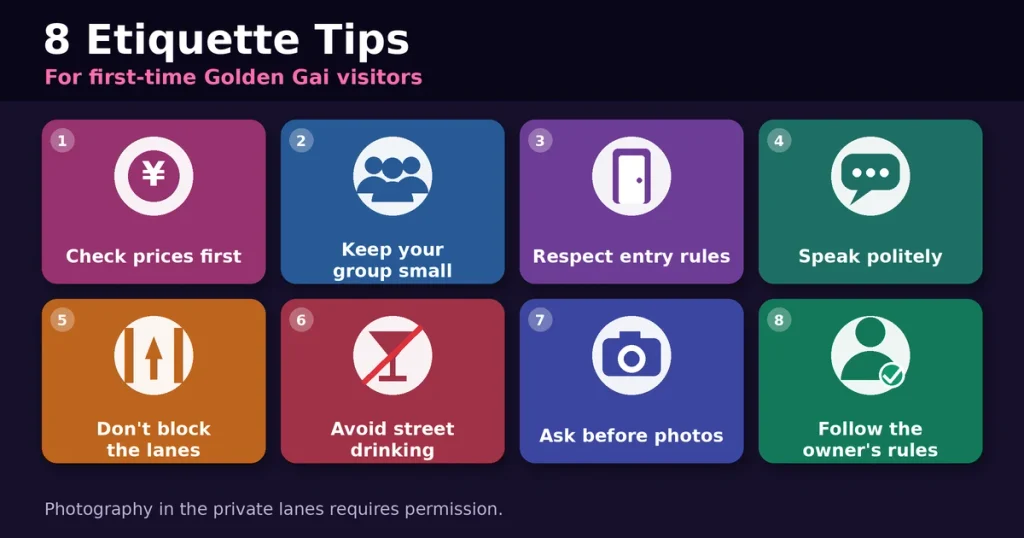
8 Etiquette Tips for First-Time Visitors
Golden Gai has a close-knit atmosphere, so a little courtesy goes a long way. Follow these simple rules:
- Check prices first: Ask about cover charges and drink costs.
- Keep your group small: Large groups may not fit inside.
- Respect entry rules: Some bars do not accept walk-in guests.
- Speak politely: Keep your voice at a reasonable level.
- Don’t block the lanes: The alleys are narrow and busy.
- Avoid street drinking: Follow the district’s rules.
- Ask before taking pictures: Photography requires permission in the private lanes and may be restricted inside bars.
- Follow the owner’s instructions: Each venue has its own customs.
These rules help protect the district’s residents, workers, and visitors. The official visitor guide specifically warns against street drinking, street smoking, and photography without permission.
Best Time to Visit Golden Gai
Most bars open in the evening, often around 8 p.m. Opening times vary by venue, and some stay open late into the night.
For a first visit, arrive around 8–9 p.m. You can look around before choosing a bar. Weekends may feel busier, so visit on a weekday if you prefer a calmer atmosphere.
How to Get to Golden Gai
Golden Gai is in Kabukicho, Shinjuku, on the east side of Shinjuku Station. It is a short walk from the station’s East Exit.
Follow your map toward Shinjuku Golden Gai or Hanazono Shrine. The lanes are easy to miss among the surrounding streets, so save the location on your phone before leaving the station.
Golden Gai: One Place Not to Miss When in Tokyo
Golden Gai offers a different view of Tokyo’s nightlife. Instead of huge clubs or bright commercial venues, you’ll find small bars with individual styles and long histories.
If you enjoy local culture and intimate spaces, it may be a memorable part of your trip. You don’t need to drink at every venue. A short visit can still give you a feel for the district.
If You Go, Look For:
Look for bars with clear menus, visible prices, and signs that welcome new customers. These details make it easier to choose a place that suits your budget and comfort level.
You can also look for music-themed venues or bars with interesting interiors. If you search for Shinjuku Golden Gai photos, use them for planning rather than assuming you can take the same pictures yourself. Photography in the lanes requires permission.
How to Get There

The easiest route is usually through Shinjuku Station’s East Exit. From there, follow the signs or a map toward Kabukicho and Hanazono Shrine. The walk takes only a few minutes.
If you’re travelling from another city, Shinjuku is a major transport hub. You can reach it from many parts of Tokyo and connect from other destinations in Japan, including Kyoto, by rail. Check your train’s arrival station before planning the final walk.
Where to Eat Before Golden Gai
Golden Gai is mainly known for drinks and small bars, so eating dinner first is a good idea. Shinjuku has plenty of ramen shops, izakayas, sushi restaurants, and casual dining spots.
Choose a meal near the station or around Kabukicho before heading into the alleys. That way, you can enjoy the bars without having to search for a full dinner late at night.
Golden Gai FAQs
Is Golden Gai Safe?
Golden Gai is a popular nightlife district, but you should stay aware of your surroundings. Check prices before ordering, avoid pushy touts, and keep your belongings secure.
Is Golden Gai Worth Visiting?
Yes, it can be worth visiting if you enjoy small bars, local nightlife, and historic streets. Choose a welcoming venue and respect its rules.
Is Golden Gai Open on Sunday?
Some bars open on Sundays, while others close. Check the specific bar’s schedule before visiting because opening days vary.
Do I Need to Speak Japanese to Enjoy Golden Gai?
No. Some bars welcome international visitors and offer English menus. Learning a few polite Japanese phrases can still make your visit easier.
Can I Visit Golden Gai During the Day?
Yes, you can walk around the surrounding area during the day, but most bars open in the evening. Remember that photography in the private lanes requires permission.
Are Golden Gai Bars Expensive?
Costs vary by venue. Many bars charge a cover fee of around ¥500 to ¥1,500 before drinks, so check the total price before entering.
How Many Bars Should I Visit in One Night?
One to three bars is a good starting point for first-time visitors. Since each venue is small, taking your time can be more enjoyable than rushing through many places.