20 Fun Facts About the Napali Coast You Should Know Before Visiting
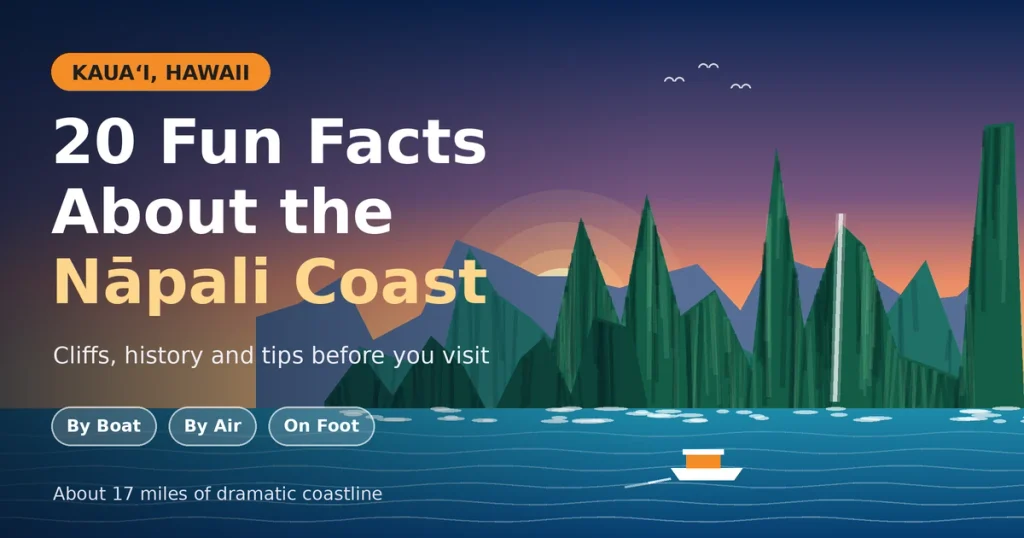
The Nāpali Coast is one of Hawaii’s most striking natural destinations. Located on the northwestern shore of Kauaʻi, it features towering cliffs, deep valleys, waterfalls, and hidden sea caves.
The coastline stretches for roughly 17 miles. Its rugged landscape has developed over millions of years through volcanic activity, erosion, and powerful ocean waves.
This guide shares 20 fascinating facts about the Nāpali Coast. You’ll also learn about its history, hiking trails, ocean tours, permits, and the best ways to plan a visit.
20 Fun Facts About the Nāpali Coast
1. Its Name Means “The Cliffs”
The Hawaiian word pali means cliff. Nāpali refers to the dramatic cliffs that define this coastline.
These steep rock walls rise above the Pacific Ocean. Their sharp ridges and green valleys create one of Kauaʻi’s most recognizable landscapes.
2. Some Cliffs Rise Thousands of Feet
Parts of the coastline feature cliffs that rise more than 4,000 feet above sea level. Their scale becomes especially impressive when viewed from the ocean.
The cliffs also create deep valleys and narrow ridgelines. These formations make the landscape look almost unreal from a distance.
3. The Coast Took Millions of Years to Form
Kauaʻi is an ancient volcanic island. Over millions of years, wind, rain, streams, and waves reshaped its terrain.
Water gradually carved valleys into the volcanic rock. Ocean waves also wore away exposed coastal sections, helping form sea caves and steep cliff faces.
4. No Road Follows the Entire Coastline
One unusual fact is that no public road runs along the Nāpali Coast itself. Its rugged terrain makes road construction extremely difficult.
Kūhiō Highway reaches the north-shore area near Hāʻena. From there, visitors can explore permitted hiking routes or choose an authorized ocean or aerial tour.
5. The Area Has a Long Hawaiian History
Native Hawaiians lived in the valleys along this coastline for generations. They developed communities and cultivated crops in suitable areas.
Stone-walled terraces remain as evidence of earlier land use. These features help tell the story of how people adapted to a remote and challenging environment.
6. The Valleys Once Supported Farming
Some coastal valleys contain traces of traditional agricultural systems. Hawaiians cultivated crops such as taro in suitable locations.
Streams provided freshwater for communities and farming. The valleys therefore had practical importance beyond their natural beauty.
7. Erosion Continues to Shape the Cliffs
The coastline is still changing. Rainwater cuts into the land, while waves gradually wear away exposed rock.
Landslides and rockfalls can also alter the terrain. This ongoing process explains why the cliffs have such irregular shapes and dramatic ridges.
8. Rainfall Varies Across Kauaʻi
Kauaʻi is known for its wet mountain interior. Mount Waiʻaleʻale, in particular, has recorded annual rainfall exceeding 400 inches in some historical periods.
However, that figure does not apply to every part of the Nāpali Coast. Rainfall varies with elevation, wind direction, and local weather patterns. Heavy rain can also create flash-flood and trail hazards.
9. Waterfalls Flow Through Its Valleys
Rainwater feeds streams and waterfalls throughout the mountainous landscape. After wet weather, some waterfalls become especially powerful.
Their appearance depends on recent rainfall. Visitors may see anything from thin cascades to dramatic streams flowing down the cliffs.
10. The Coast Appears in Famous Movies
Kauaʻi’s dramatic scenery has attracted filmmakers for decades. Parts of the island and its surrounding landscapes have appeared in well-known Hollywood productions.
Jurassic Park is among the movies associated with Kauaʻi’s scenery. Other productions have used the island’s cliffs, valleys, and tropical landscapes for memorable scenes.
A helicopter tour can provide aerial views of locations associated with film history. However, not every famous movie scene was filmed directly along the Nāpali Coast.
11. The Kalalau Trail Is Its Main Hiking Route
The Kalalau Trail is the best-known hiking route along this rugged coast. The full trail covers approximately 11 miles each way between Hāʻena and Kalalau Valley.
It crosses valleys, streams, and exposed ridgelines. The terrain can become slippery and dangerous after rain.
The full journey is challenging and requires careful preparation. Visitors should check trail conditions and permit rules before setting out.
12. Hiking Permits Depend on How Far You Go
You don’t need an overnight camping permit for every permitted day hike. However, access reservations are required for the Hāʻena State Park entry area, and parking arrangements may also be necessary.
A hike permit should be arranged through official state park channels. Requirements and availability can change, so verify the latest rules before traveling.
13. Boat Trips Reveal Hidden Coastal Features
An authorized boat tour offers a different view of the cliffs. From the water, visitors can see the scale of the rock walls and look into coastal valleys.
Some trips may pass sea caves or offer opportunities to observe marine wildlife. Routes depend on ocean conditions, operator permissions, and the season.
Ocean trips can be bumpy when waves are rough. Choose a licensed operator and follow the crew’s safety instructions.
14. The Coast Looks Different From the Air
Aerial views reveal patterns that are difficult to appreciate from sea level. Deep valleys, narrow ridges, and waterfalls become easier to see from above.
A helicopter flight may also provide views of Kauaʻi’s mountainous interior. Weather can affect visibility and lead to cancellations.
Compare tour routes before booking. Not every flight follows the same path or visits the same landmarks.
15. Swimming Is Not the Only Way to Enjoy Its Beaches
Some beaches along the coastline are remote and difficult to reach. Their beauty can make them look inviting, but access and ocean conditions vary.
Swimming to an isolated beach is not a safe substitute for authorized access. Strong currents, powerful surf, and difficult shore entries can create serious risks.
Always check official ocean-safety guidance. Never enter the water when conditions are dangerous, and avoid assuming that a quiet-looking sea is safe.
16. Sea Caves Add to the Dramatic Scenery
Waves have gradually carved openings into parts of the coastline. These sea caves add another striking feature to the cliffs.
Some are visible during ocean excursions. Access depends on sea conditions and the route used by the tour operator.
Never enter a cave or approach a rocky shoreline without proper guidance. Waves can surge into narrow openings with little warning.
17. Wildlife Can Be Seen Along the Coast
The surrounding ocean supports a range of marine life. Depending on the season and conditions, visitors may spot dolphins, sea turtles, or other animals.
Humpback whales migrate through Hawaiian waters during the winter season. Sightings are never guaranteed, so enjoy wildlife encounters without expecting a particular animal.
Keep a respectful distance from wildlife. Never chase animals or interfere with their natural behavior.
18. The Weather Can Change Quickly
The coast’s steep terrain creates changing local conditions. Rain may arrive suddenly, and exposed ridges can become slippery or windy.
Check the weather forecast before hiking or booking an ocean excursion. Also review official park alerts because heavy rain and storm damage can affect access.
Bring suitable clothing, water, sun protection, and footwear. Postpone outdoor activities when authorities warn of dangerous conditions.
19. A Map Helps You Understand the Area
A reliable map helps you locate Hāʻena State Park, the Kalalau Trail, and nearby viewing areas. It can also help you understand the distance between trailheads and other attractions.
However, a map alone cannot show every current hazard. Cell service is limited or unavailable in parts of the wilderness park.
Download useful information before leaving your accommodation. Follow posted signs and official guidance rather than relying entirely on a phone.
20. The Coast Rewards Responsible Visitors
The Nāpali Coast is both a natural wonder and a culturally important landscape. Its fragile environment needs protection from litter, unsafe behavior, and excessive disturbance.
Stay on permitted trails and pack out your rubbish. Respect historic structures and avoid disturbing plants, wildlife, or cultural sites.
Responsible visits help protect this special place for future generations. Planning ahead also makes your experience safer and more enjoyable.
How to See the Nāpali Coast
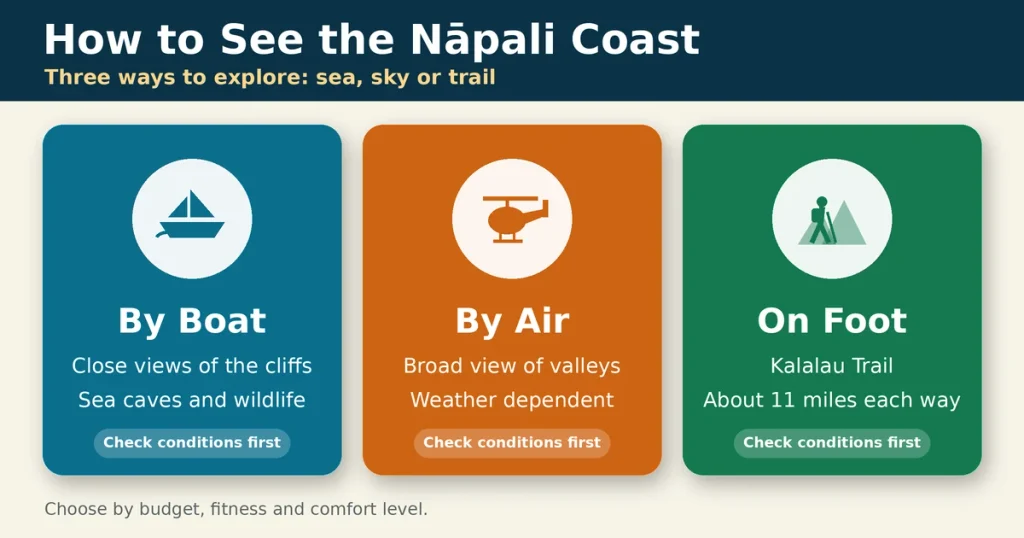
There are three main ways to experience this coastline: by boat, by air, or on foot. Each offers a different perspective, so choose according to your budget, fitness, and comfort level.
Visit by Boat
A guided boat trip provides close views of the cliffs from the Pacific Ocean. Depending on conditions, you may see waterfalls, sea caves, and marine wildlife.
Some tours operate seasonally or adjust their routes when the sea becomes rough. Check departure locations, trip duration, cancellation policies, and accessibility before booking.
Visit by Air
An aerial tour gives you a broad view of the coastline’s valleys and ridges. It may suit visitors who cannot manage a demanding hike.
Flights are weather-dependent. Confirm what the route includes and ask about seating, motion sensitivity, and cancellation arrangements.
Visit on Foot
The Kalalau Trail offers an immersive way to explore the landscape. Shorter permitted hikes can suit visitors who want to experience part of the area without completing the full route.
The full trail is not suitable for everyone. Research distance, elevation changes, stream crossings, and exposure before deciding how far to go.
Nāpali Coast Access: Roads, Park Boundaries, and Reservations
The Nāpali Coast State Wilderness Park is managed to protect its natural and cultural resources. Access rules vary by activity and destination.
Hikers generally enter the trail system through Hāʻena State Park. Day-use reservations and parking arrangements may be required, while overnight trips need the relevant camping permit.
Official information is available from the Hawaiʻi Division of State Parks. Check current notices before leaving because storms, trail conditions, or park management decisions may affect access.
Tips for Visiting the Nāpali Coast
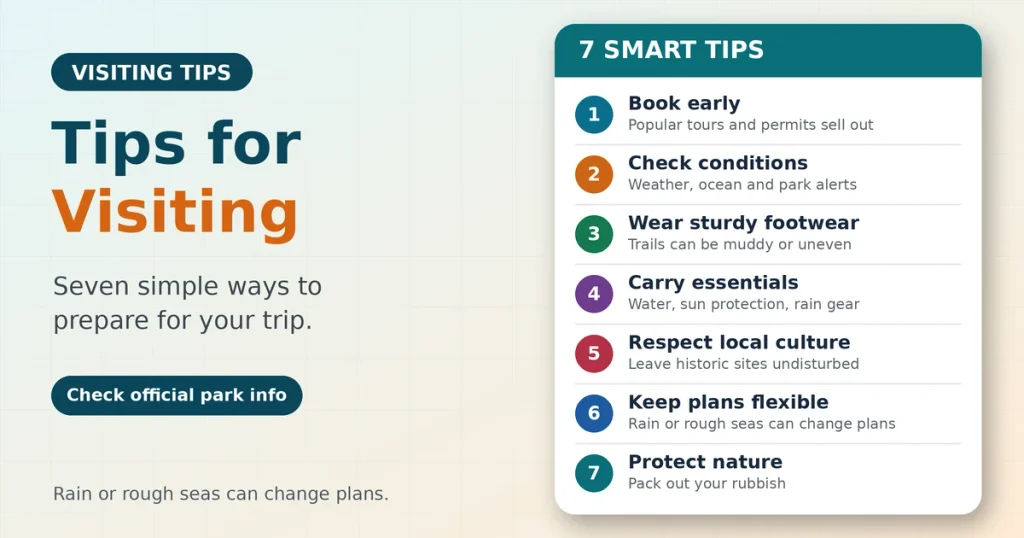
A little preparation can make a big difference. Use these tips to plan your trip.
- Book early: Popular tours and camping permits may sell out.
- Check conditions: Review weather, ocean forecasts, and park alerts.
- Choose suitable footwear: Hiking trails may be muddy or uneven.
- Carry essentials: Bring water, sun protection, and rain gear.
- Respect local culture: Leave historic sites and natural features undisturbed.
- Keep plans flexible: Rain or rough seas can change outdoor activities.
- Protect the environment: Take your rubbish with you and follow posted rules.
Things to Do Around the Nāpali Coast
Beyond the coastline itself, Kauaʻi offers several ways to extend your trip. Visit nearby north-shore beaches where access is permitted, explore local towns, or enjoy scenic viewpoints around the island.
You can also discover Kauaʻi’s wider landscape through guided nature tours and cultural experiences. Check travel times before combining attractions because mountain roads and island distances can make journeys longer than expected.
For the best experience, select activities that fit your schedule rather than trying to see everything in one day.
Conclusion
The Nāpali Coast stands out for its towering cliffs, green valleys, waterfalls, and deep Hawaiian history. Millions of years of erosion helped create this remarkable landscape, while traditional communities left an important cultural legacy.
You can experience the coast by boat, air, or hiking trail. Choose your route carefully, follow official access rules, and check conditions before setting out.
Frequently Asked Questions
What is special about the Nāpali Coast?
The Nāpali Coast is famous for its towering green cliffs, deep valleys, waterfalls, and dramatic Pacific Ocean views.
What movies were filmed on the Nāpali Coast?
Kauaʻi’s landscapes have appeared in films such as Jurassic Park and King Kong, although not every scene was filmed directly on the Nāpali Coast.
How difficult is the Nāpali Coast hike?
The Kalalau Trail is strenuous, with steep terrain, slippery sections, and stream crossings that require careful preparation.
Is the Nāpali Coast worth it?
Yes, it offers spectacular scenery and memorable experiences by boat, helicopter, or hiking trail.