
12 Facts About St Basil’s Cathedral: Latest Guide 2026
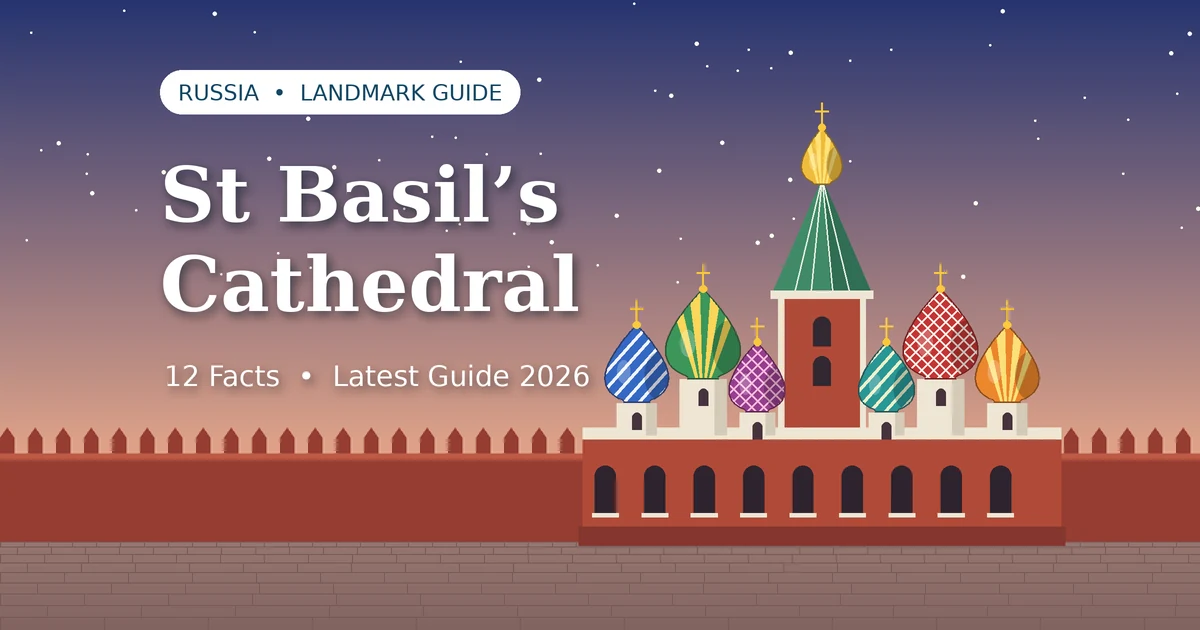
St Basil’s Cathedral is one of the most recognizable buildings in Moscow, Russia. Its colorful domes, patterned walls, and unusual design make it look almost like a fairy-tale palace. Yet behind its striking appearance lies a long history shaped by religion, royal power.
Located beside Red Square, the cathedral attracts visitors interested in architecture, culture. This guide explores 12 fascinating facts, what you can see inside, how to visit, and why the building remains an important symbol of Russia.
History & More Information
St Basil’s Cathedral was built during the reign of Tsar Ivan IV, better known as Ivan the Terrible. Construction began in 1555 and was completed in 1561. The project commemorated the Russian victory over the Kazan Khanate.
Its formal name is the Cathedral of the Intercession of the Most Holy Theotokos on the Moat. People commonly call it St Basil’s Cathedral because of its association with Basil the Blessed, a religious figure from Moscow.
1. It Was Built by Ivan the Terrible
Ivan IV ordered the construction of the cathedral in the 16th century. He became the first Russian ruler crowned as Tsar of All Rus and expanded his kingdom during his reign.
The cathedral reflects the importance of religion and royal authority during that period. Its unusual design also distinguishes it from many traditional European churches.
Although people associate the building with Ivan the Terrible, he did not personally design it. The construction was carried out by architects and craftspeople working under his order.
2. The Cathedral Was Constructed in Honor of a Military Conquest
The cathedral commemorates the Russian victory over the Kazan Khanate in 1552. This campaign was an important event during Ivan IV’s reign.
The central church is dedicated to the Intercession of the Virgin Mary. The feast day associated with this dedication fell during the campaign against Kazan.
3. Ivan Allegedly Blinded the Cathedral’s Architect
One of the most repeated stories about St Basil’s Cathedral claims that Ivan the Terrible blinded its architect so he could never create another building as beautiful.
The story is dramatic, but historians do not treat it as a confirmed fact. The exact identities and biographies of the original architects remain subjects of historical discussion.
It’s best to understand this tale as a legend rather than established history. The cathedral’s beauty has helped the story survive for generations, but a compelling story is not the same as reliable evidence.
4. Many Names Have Graced the Cathedral
The building is known by several names. Its official name is the Cathedral of the Intercession of the Most Holy Theotokos on the Moat. It is also called Pokrovsky Cathedral and St Basil’s Cathedral.
The different names reflect its religious dedication, historical identity, and association with Basil the Blessed. The name “St Basil’s” became especially familiar to international visitors.
When searching for historical information, you may see these names used interchangeably. Knowing them makes it easier to find museum information, academic sources, and travel guidance.
5. It Was Eventually Named for a Russian “Fool”
The name St Basil’s Cathedral comes from Basil the Blessed, a religious figure who lived in Moscow during Ivan IV’s time. He is often described as a holy fool, a term used in Eastern Orthodox traditions for someone who rejects ordinary social expectations.
The phrase “holy fool” can sound insulting in modern English. In its religious context, however, it describes a particular spiritual tradition rather than a casual judgment about someone’s intelligence.
6. The Cathedral Is Made Up of Nine Chapels
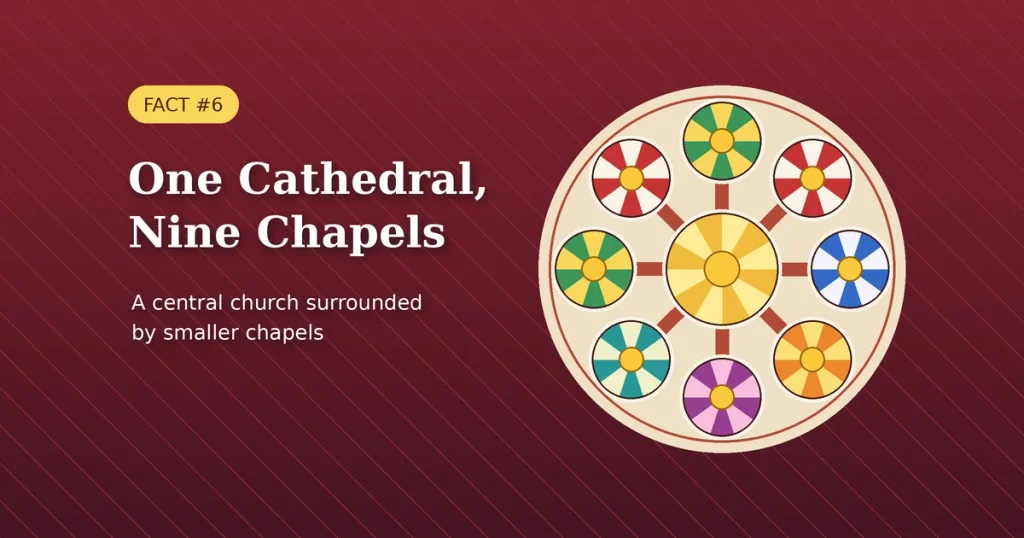
The cathedral’s layout is one of its most interesting features. Its familiar exterior arrangement consists of a central church surrounded by eight smaller chapels, creating the appearance of a group of towers gathered together.
The museum describes the complete complex as 10 churches in one. This count includes the additional church dedicated to St Basil, which was added later. That explains why descriptions sometimes mention nine churches or chapels.
Inside, narrow passages connect the different spaces. The result feels quite different from a single large church hall. Each section has its own character, artwork, and architectural details.
7. The Brilliant Colors Weren’t Added for Over 200 Years
The colourful appearance people recognize today did not emerge all at once. The cathedral’s original exterior looked different from the richly patterned building seen now.
The patterns and colours make the cathedral stand out against the surrounding buildings on Red Square. They also help visitors distinguish its many domes and towers.
8. It Is One of the Centerpieces of Red Square
St Basil’s Cathedral stands at the southern end of Red Square in Moscow. The square is surrounded by major landmarks, including the Kremlin walls and the State Historical Museum.
For many visitors, the cathedral is the first image that comes to mind when they think about Moscow. Its distinctive silhouette is also widely used in travel guides, artwork, souvenirs, and discussions of Russia’s name and national identity.
9. It Is Now Mostly a Secular Building
St Basil’s Cathedral operates as a museum where visitors can explore its architecture, historic interiors, and religious collections. It is not simply a conventional church that people enter for regular daily services.
However, its religious role has not disappeared completely. Worship services have returned to parts of the complex, and the building retains its spiritual significance.
10. A Replica Stands Near the Russia–China Border
A replica of St Basil’s Cathedral has been associated with the Russian-themed city of Manzhouli, near China’s border with Russia. Manzhouli features architecture and attractions inspired by Russian culture.
Replicas can help visitors experience the visual style of famous landmarks without travelling to the original site. However, they are not substitutes for the historic building in Moscow.
If you come across pictures of a similar cathedral in another country, check the caption and location carefully. The original St Basil’s Cathedral remains at Red Square in Moscow.
11. A Soviet Architect Helped Save It
St Basil’s Cathedral faced serious threats during the Soviet period, when some religious buildings were demolished or repurposed. The cathedral’s survival is often linked to preservation efforts by people.
What is clear is that the cathedral survived and became an important museum and heritage landmark. Its preservation allowed later generations to study one of Russia’s most distinctive examples of historic architecture.
12. It Is a UNESCO World Heritage Site
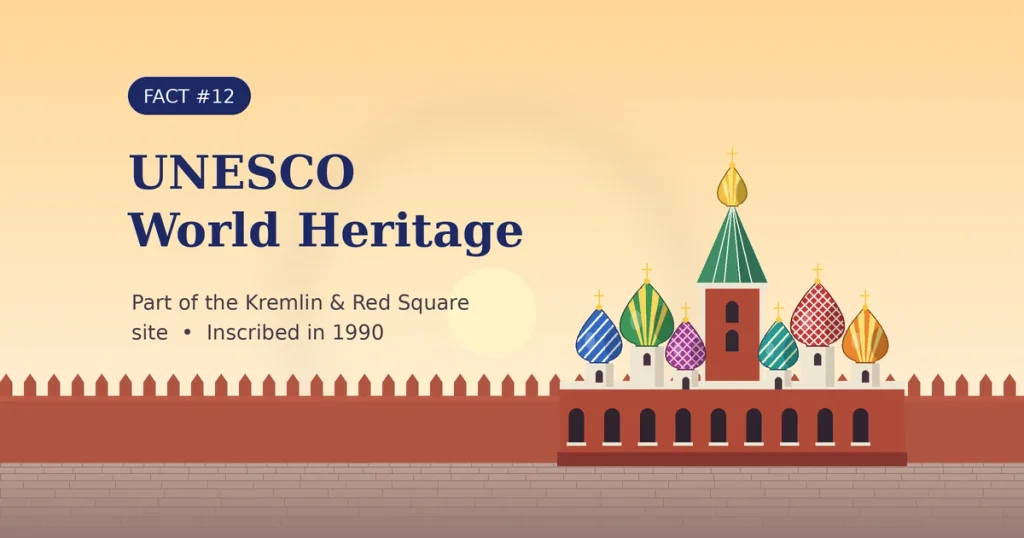
St Basil’s Cathedral forms part of the Kremlin and Red Square UNESCO World Heritage property. The site was inscribed on the World Heritage List in 1990.
UNESCO recognizes the area’s outstanding architectural and historical importance. The cathedral is especially notable for its connection to Russian Orthodox art and the development of Russian architecture
Points of Interest
The Domes
The domes are among the cathedral’s most memorable features. They vary in colour, pattern, and shape, giving the building a lively appearance from almost every angle.
Take time to walk around the exterior rather than viewing it from a single spot. Different viewpoints reveal details that are easy to miss in a quick photograph.
The Nine Chapels
The cathedral’s chapels form a connected network of religious spaces. Their compact rooms, decorated walls, and historic icons make the interior experience more intimate than the exterior might suggest.
If you plan to explore the inside, allow time to move slowly through the rooms. The historic floors have uneven surfaces and high thresholds, so watch your step.
How to Get to St Basil’s Cathedral
The cathedral’s location is 7 Red Square, Moscow, Russia. Several metro stations serve the surrounding area, including Okhotny Ryad, Teatralnaya, Ploshchad Revolyutsii, and Kitay-Gorod.
Once you reach Red Square, the cathedral is easy to identify by its colourful domes. Walking is often the simplest way to explore the nearby historic attractions.
Nearby Attractions
You can combine a cathedral visit with several nearby landmarks:
- Red Square: Explore the historic square and enjoy views of the cathedral.
- The Kremlin: Discover the fortified complex and its historic buildings, subject to access and ticket rules.
- State Historical Museum: Learn more about Russia’s past through its collections.
- GUM: Visit the famous shopping arcade on Red Square.
- Lenin’s Mausoleum: Check opening arrangements and access restrictions before planning a stop.
These attractions are close enough to make a practical walking itinerary, although opening hours and entry requirements vary.
Best Time to Visit
Late spring through early autumn is a popular period for exploring Moscow. Longer daylight hours make it easier to see Red Square and photograph the cathedral’s exterior.
Winter offers a different atmosphere, with cold weather and the possibility of snow. If you visit in winter, dress warmly and allow extra time for outdoor walking.
The best time also depends on crowd levels. Weekday mornings may feel less busy than peak visiting periods, but public events can affect access at any time.
Facts About St Basil’s Cathedral
Here are a few useful details to remember:
- Construction: The cathedral was built between 1555 and 1561.
- Commissioned by: Tsar Ivan IV, known as Ivan the Terrible.
- Purpose: It commemorated the victory over the Kazan Khanate.
- Common name: St Basil’s Cathedral.
- Official name: Cathedral of the Intercession of the Most Holy Theotokos on the Moat.
- Address: 7 Red Square, Moscow, Russia.
- Heritage status: Part of the Kremlin and Red Square UNESCO World Heritage site.
- Museum collection: Historic interiors, religious artwork, icons, and decorative details.
If you enjoy building models, the cathedral’s complex shape can feel like a real puzzle. Its clustered towers and patterned domes make it a memorable subject for architecture fans.
FAQs: Things to Know Before You Go
Why is Saint Basil Cathedral famous?
It is famous for its colourful domes, distinctive Russian architecture, historic significance, and prominent position on Red Square.
Why is St. Basil Cathedral so colorful?
Its bright colours developed through decorative changes over the centuries, including later painting and ornamentation.
Who is buried under St Basil’s Cathedral?
Some relics of Basil the Blessed are associated with the cathedral, and his burial site is marked within the church dedicated to him.
Can you go inside St. Basil’s Cathedral?
Yes, visitors can explore the cathedral as a museum, but check the official opening hours, ticket rules, and any temporary closures before visiting.
What is St Basil’s Cathedral called in Russian?
It is commonly known in Russian as Собор Василия Блаженного (Sobor Vasiliya Blazhennogo). Its formal name refers to the Cathedral of the Intercession of the Most Holy Theotokos on the Moat.