Amalfi Coast, Italy: A Complete Travel Guide to Towns, Beaches, and Beautiful Views
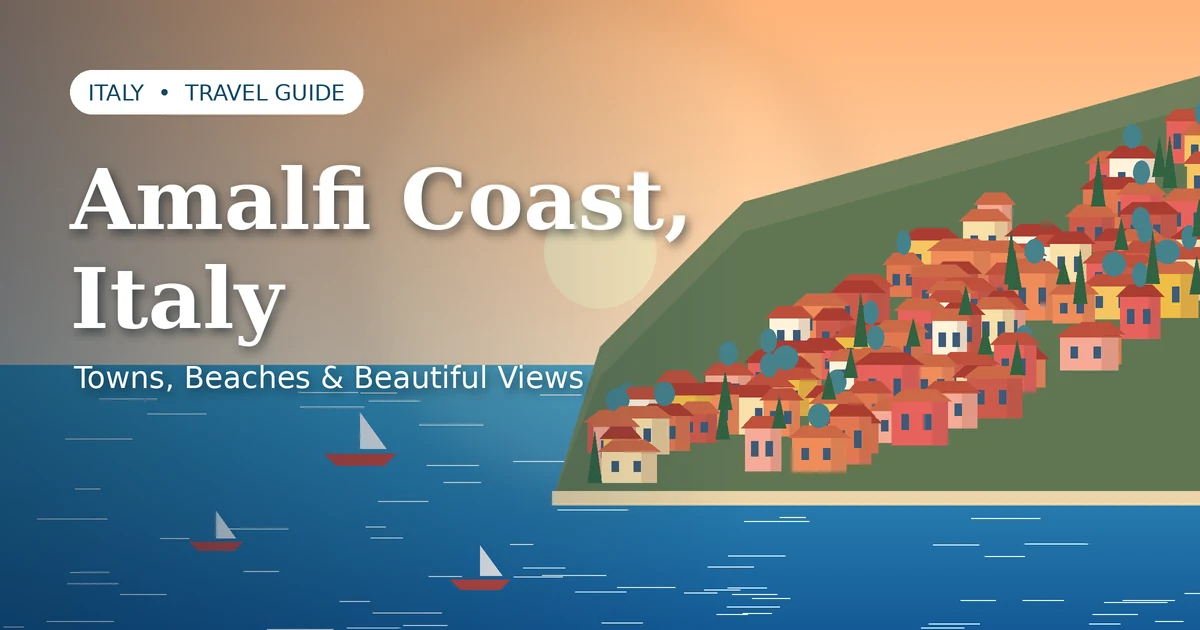
The Amalfi Coast is one of Italy’s most beautiful coastal destinations. Colorful villages cling to steep cliffs above the blue Mediterranean Sea. Lemon groves, historic churches, and small beaches add to its charm.
Located in southern Italy, this famous coastline attracts couples, families, food lovers, and adventure seekers. Every town offers a different experience. Some are known for luxury hotels, while others offer quiet streets and traditional Italian food.
What Is the Amalfi Coast, and Where Is It Located?
The Amalfi Coast lies in the Campania region of southern Italy. It stretches along the southern side of the Sorrentine Peninsula, overlooking the Gulf of Salerno.
The area includes well-known towns such as Positano, Amalfi, and Ravello. Smaller villages offer beautiful scenery and a quieter atmosphere.
The Amalfi Coast became a UNESCO World Heritage Site in 1997. UNESCO recognizes its cultural landscape, historic settlements, and distinctive Mediterranean scenery.
Amalfi
Amalfi is the historic heart of the coast. Its main square features the impressive Cathedral of Saint Andrew.
Visitors can explore narrow streets, browse local shops, and enjoy seaside restaurants. Amalfi is also a practical base for buses and ferries.
Atrani
Atrani is a small village just a short distance from Amalfi. It features a compact historic center, traditional houses, and a charming central square.
Its smaller size makes it suitable for travelers who prefer a quieter atmosphere. You can also walk between Atrani and Amalfi.
Conca dei Marini and the Emerald Grotto
Conca dei Marini is a coastal village known for its scenic setting. One of its best-known attractions is the Emerald Grotto, a sea cave famous for the green light that reflects through its water.
Access and boat services can depend on sea conditions. Check local information before planning a visit.
Furore
Furore is known for its dramatic coastal inlet, often called the Fiordo di Furore. Cliffs rise around a small beach beneath a bridge.
It is a striking place for coastal views and photography. However, the beach is small and can become crowded during summer.
Maiori and Minori
Maiori is known for its relatively long beach and waterfront promenade. It can be a practical option for families and travelers seeking more room to relax.
Nearby Minori has a traditional town center and a strong food culture. It is especially known for pasta and lemon-flavored desserts.
Praiano
Praiano offers a quieter atmosphere between Positano and Amalfi. Its coastal views make it popular with travelers who want to enjoy sunsets away from the busiest tourist centers.
The town has steep roads and stairways. Choose accommodation carefully if mobility or carrying luggage is a concern.
Ravello
Ravello sits high above the coast. It is famous for its gardens, historic villas, and sweeping views.
Visit Villa Rufolo or Villa Cimbrone for architecture and scenic terraces. Ravello is also known for classical music events and a more peaceful atmosphere.
Tramonti
Tramonti lies inland among the Lattari Mountains. Its rural setting offers a different experience from the busy coastal villages.
The area is associated with vineyards, local food, and traditional countryside life. Consider it if you want to explore beyond the shoreline.
A Brief History of the Amalfi Coast
Amalfi became an important maritime power during the Middle Ages. Its merchants traded across the Mediterranean and helped connect different cultures.
Historic churches, watchtowers, and old streets reflect the region’s long history. The surrounding landscape also shaped how communities developed.
Terraced hillsides allowed residents to cultivate lemons, vines, and olive trees. Today, traditional farming, fishing, crafts, and tourism all contribute to local life.
Why Is the Amalfi Coast a UNESCO World Heritage Site?
The UNESCO designation recognizes more than attractive scenery. It highlights the relationship between the landscape and the communities that have shaped it over centuries.
Historic settlements sit between steep mountains and the sea. Terraced farmland, traditional architecture, and winding paths form part of this cultural landscape.
The region’s natural beauty and cultural heritage make it a distinctive destination. Visitors can help preserve it by respecting local communities and avoiding littering.
Six Beautiful Places to Visit on the Amalfi Coast
If you’re short on time, focus on a few towns rather than trying to visit everything in one day.
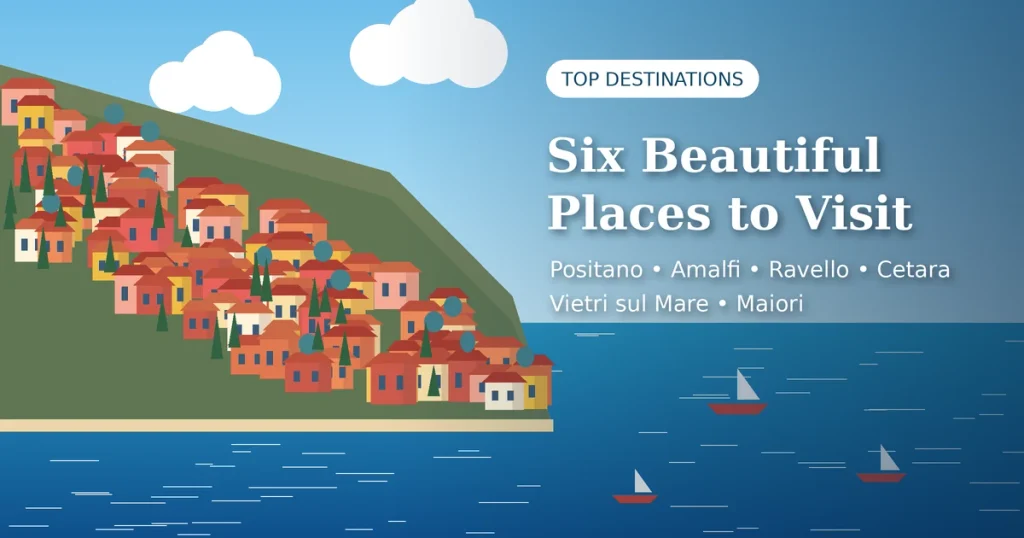
1. Positano
Positano is famous for colorful houses climbing the hillside. Its narrow lanes contain boutiques, cafés, and restaurants.
Spend time at Spiaggia Grande or explore the smaller streets above the beach. Keep in mind that the steep steps can make walking tiring.
2. Amalfi
Amalfi combines history, shopping, and seaside scenery. Visit the cathedral, explore the historic center, and try local pastries.
Its transport connections also make it a useful base for exploring nearby towns.
3. Vietri sul Mare
Vietri sul Mare is famous for its colorful handmade ceramics. Local workshops and shops sell decorative tiles, plates, and other pottery.
It is a good stop for travelers interested in traditional crafts. The town also provides access to the eastern end of the coast.
4. Cetara
Cetara is a traditional fishing village known for seafood. One local specialty is colatura di alici, a savory fish sauce made from anchovies.
Visit for a relaxed waterfront walk and a seafood meal. It offers a different atmosphere from the more glamorous resort towns.
5. Ravello
Ravello is ideal for gardens, historic villas, and panoramic views. It sits above the coast, so reaching it usually involves a bus, car, or transfer from a coastal town.
Allow enough time to explore its gardens and quiet lanes.
6. Maiori
Maiori is a useful choice for beach time and waterfront walks. Its beach is longer than those in many neighboring villages.
It can also offer more accommodation choices at different price levels. Compare current rates before deciding where to stay.
Five Local Foods to Try
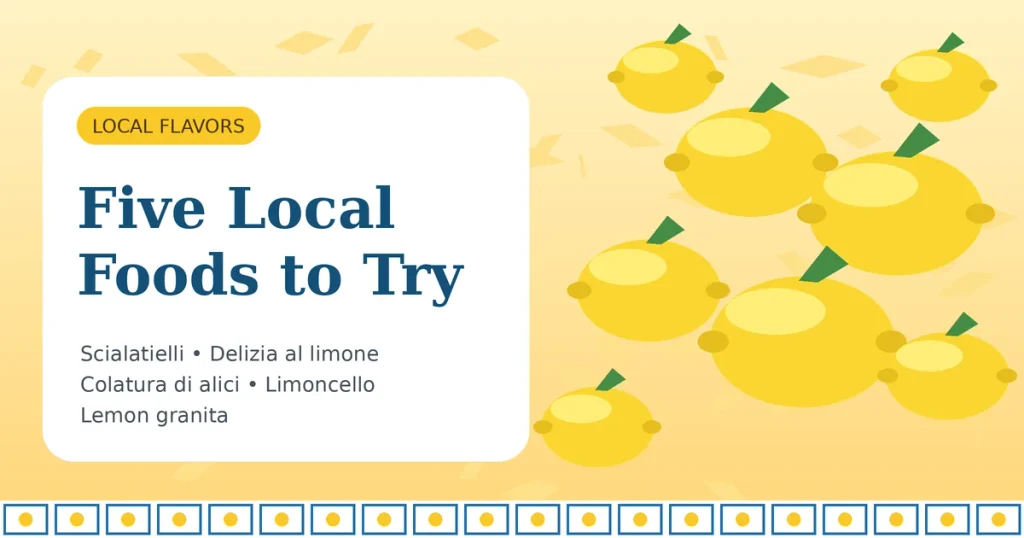
Food is an important part of the coastal experience. Many dishes combine seafood, fresh produce, pasta, and locally grown lemons.
- Scialatielli with seafood: A thick, fresh pasta often served with shellfish or other seafood.
- Delizia al limone: A lemon-flavored dessert with sponge cake and cream.
- Colatura di alici: A traditional anchovy sauce associated with Cetara.
- Limoncello: A lemon liqueur traditionally served after a meal. Check alcohol rules and drink responsibly.
- Lemon granita: A refreshing frozen lemon dessert, especially enjoyable in warm weather.
Menus vary between towns and seasons. Ask a local restaurant about regional specialties and ingredients when ordering.
Best Things to Do on the Amalfi Coast
The coast offers much more than scenic drives. You can combine sightseeing, outdoor activities, and local experiences.
- Explore the towns: Walk through historic centers and browse artisan shops.
- Take a ferry: Enjoy views of the cliffs from the water when seasonal services operate.
- Visit the beaches: Relax at accessible beaches such as those in Maiori or Positano.
- Walk scenic trails: Consider the Path of the Gods if you’re comfortable with hiking and exposed sections.
- Visit historic villas: Explore the gardens and architecture of Ravello.
- Try local food: Sample seafood, fresh pasta, and lemon desserts.
- Browse ceramics: Look for handmade pottery in Vietri sul Mare.
Plan fewer activities per day than you might in a large city. Travel between towns can take longer than expected.
Best Hotels on the Amalfi Coast
The right place to stay depends on your budget and travel style. Positano is known for its dramatic views and luxury properties, while Amalfi offers useful transport connections.
Maiori and Minori can provide alternatives for travelers seeking beach access or a more relaxed pace. Ravello suits visitors who prefer hillside scenery and gardens.
Compare location, stairs, breakfast, cancellation terms, and transport access before making a booking. Sea-view rooms often cost more, especially during peak season.
Best Months to Visit
Late spring and early autumn are popular times to visit. April, May, September, and October can offer a balance of pleasant weather and fewer crowds than midsummer.
June is often warm and sunny. July and August bring the busiest beaches, higher accommodation prices, and heavier road traffic.
Winter is quieter and may offer lower rates. However, rain is more likely and some hotels, restaurants, and ferry services may close or reduce their schedules.
Weather on the Amalfi Coast
The region has a Mediterranean climate, with warm summers and generally mild winters. Coastal temperatures can differ from conditions in the surrounding hills.
Summer is suitable for beach activities, but heat and crowds can make walking harder. Spring and autumn are often more comfortable for sightseeing and hiking.
Check the forecast before booking boat trips or outdoor excursions. Rain and rough seas may affect services, so keep alternative plans available.
How to Get There and Save Money
Most visitors reach the area through Naples or Salerno. Your best route depends on your arrival airport, travel dates, and final destination.
When comparing Italy flights, check the total journey cost rather than airfare alone. Include airport transfers, luggage fees, train tickets, and onward transport to the coast.
A map can help you group nearby towns and avoid unnecessary travel. Download directions before leaving because mobile coverage may vary.
Here are a few ways to manage your budget:
- Travel in May or late September when possible.
- Compare accommodation in Maiori, Minori, and other less expensive towns.
- Use public buses and ferries when practical.
- Eat at local trattorias instead of choosing only waterfront venues.
- Book accommodation early for popular summer dates.
- Check ferry schedules before relying on a seasonal route.
Amalfi Coast Travel Tips
A little planning helps you enjoy the region without unnecessary stress. Wear comfortable shoes because many streets and paths include steep steps. Carry water, sun protection, and a light layer for cooler evenings.
If you’re driving, research parking and local traffic restrictions before arrival. Narrow coastal roads can become congested during summer.
The name’s pronunciation is often approximated in English as “ah-MAHL-fee.” You don’t need to speak Italian fluently, but learning simple greetings can make everyday interactions friendlier.
Conclusion
The Amalfi Coast brings together dramatic sea views, historic towns, traditional food, and beautiful walking routes. Positano and Amalfi offer famous sights, while places such as Atrani, Cetara, and Tramonti provide different perspectives on local life.
Choose your base according to your budget and travel plans. Visit during the shoulder season if you want a balance of comfortable weather and fewer crowds.
With thoughtful planning, you can experience the coast’s beauty without rushing between every village.
Frequently Asked Questions
Is the Amalfi Coast very expensive?
It can be expensive, especially in summer, but visiting in the shoulder season and staying in less costly towns can reduce expenses.
What city in Italy is closest to the Amalfi Coast?
Salerno is one of the main gateway cities, while Naples is a major airport and transport hub for the region.
Why is the Amalfi Coast so famous?
It is known for colorful cliffside villages, blue sea views, historic architecture, lemon groves, and its UNESCO World Heritage status.
Is it better to stay in Positano or Amalfi?
Choose Positano for dramatic scenery and boutiques, or Amalfi for convenient transport connections and easier access to other coastal towns.