A Mini Guide to Kyoto Bamboo Forest: Is It Worth It + Best Alternative in 2026

The Bamboo forest Kyoto is one of Japan’s most recognizable natural sights. Tall green bamboo lines a narrow walking path in the Arashiyama district. The light filters through the stalks and creates a peaceful atmosphere.
However, the grove is smaller than many visitors expect. It can also get very crowded. This guide explains when to visit, what to see nearby, how much things cost, and where to find a quieter alternative in 2026.
In a Rush? Here Are Our Favourite Hotels in Kyoto, Japan
If you want to visit the bamboo grove early, staying in western Kyoto can save travel time. Arashiyama has traditional inns and smaller hotels close to the main attractions.
Kyoto Station is another practical base. It offers easy train connections and a wider choice of accommodation. Compare prices and transport times before booking because rates change with the season.
Kyoto Bamboo Forest – My Experience
The famous grove feels different from Kyoto’s busy shopping streets. Bamboo towers over the path and creates a striking green corridor. The sound of leaves moving in the wind adds to the atmosphere.
Still, the experience depends on your timing. Late morning often brings tour groups and busy photo spots. Arriving early gives you more space to enjoy the scenery and take pictures.
How to Get to the Bamboo Forest in Kyoto?
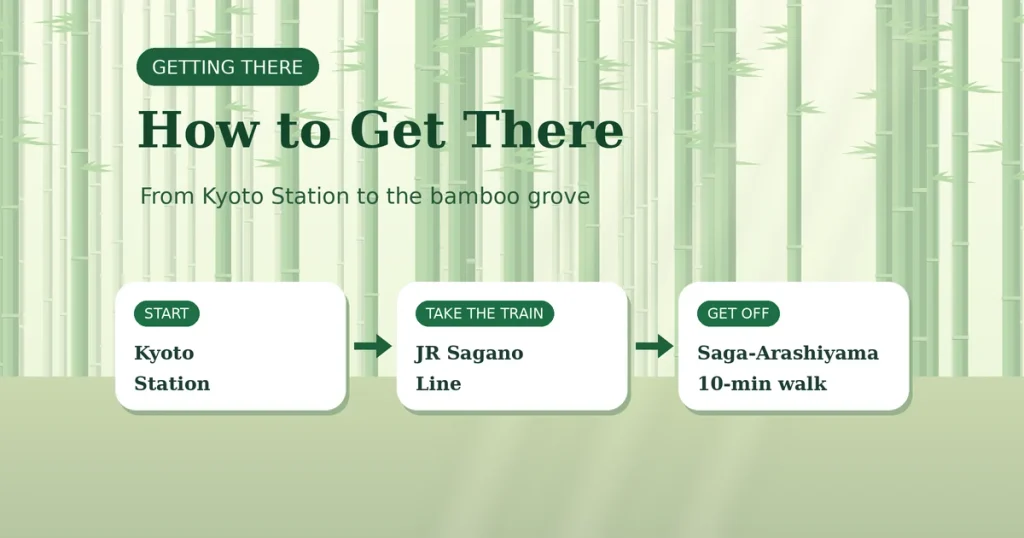
The grove is in Arashiyama, in western Kyoto. The easiest option for many visitors is to take the JR Sagano Line to Saga-Arashiyama Station. From there, the grove is about a 10-minute walk.
You can also use the Hankyu Railway or the Keifuku Randen tram. Each line stops in a different part of the district. Check your route before leaving because the stations are not in the same location.
How to Get There From Kyoto Station
Take the JR Sagano Line from Kyoto Station to Saga-Arashiyama Station. Follow the signs towards the bamboo grove and Tenryu-ji area.
Buses are another option, but road traffic can slow the journey. Trains are often more predictable during busy seasons. Leave extra time during cherry blossom season and autumn.
Is Arashiyama Bamboo Forest Kyoto Worth Visiting? (What to Expect)
Yes, it can be worth visiting if you enjoy nature, photography, and traditional Japanese scenery. The towering bamboo creates a distinctive landscape that is different from Kyoto’s temples and historic streets.
However, do not expect a large wilderness area. The main path is relatively short, and crowds can reduce the peaceful feeling. Combine the grove with nearby temples, the riverfront, or a longer walk to make the trip more rewarding.
Bamboo Forest, Kyoto: Best Time to Visit
The Bamboo forest, Kyoto: best time to visit depends on your priorities. Early morning is ideal for quieter paths and softer light. Try arriving around 7 a.m. or earlier if your schedule allows.
Spring and autumn are popular because the weather is often comfortable. Summer brings lush green bamboo but can feel hot and humid. Winter offers a quieter atmosphere, although daylight hours are shorter.
Things to Do at Arashiyama Bamboo Grove (Bamboo Forest)
The Arashiyama Bamboo Grove is the main attraction, but the surrounding district offers much more. You can visit historic temples, explore gardens, cross a famous bridge, or enjoy a river cruise.
Plan at least half a day for the area. A full day works better if you want to visit the monkey park and several temples without rushing.
Take Pictures in the Arashiyama Bamboo Grove
The bamboo path is one of Kyoto’s most photographed locations. Tall stalks create natural lines that work well in wide-angle shots. Morning light can make the green colours look especially rich.
Be patient when taking photos. Other visitors use the same narrow path, so avoid blocking the walkway. Do not climb on bamboo or damage plants for a better picture.
Jojakko-ji Temple
Jojakko-ji sits on a hillside in the Arashiyama area. Its grounds feature moss, trees, stone steps, and traditional architecture. The elevated location also provides views over parts of Kyoto.
Autumn is a popular time to visit because the surrounding trees change colour. The temple is a useful stop if you want a quieter setting after the main grove.
Tenryu-ji Temple
Tenryu-ji is a major Zen temple and a UNESCO World Heritage Site. Its Sogenchi Garden uses the surrounding mountains as part of its design. The garden offers a calm contrast to the crowded bamboo path.
You can visit the garden for a separate admission fee. The temple grounds also provide access to the bamboo grove from the northern side. Check current opening hours before planning your route.
Arashiyama Monkey Park Iwatayama
This hillside park is home to Japanese macaques. Visitors walk uphill to reach an open area with views across Kyoto. The climb takes some effort, so wear comfortable shoes.
Follow the staff’s instructions around the animals. Do not touch or feed them outside the designated feeding area. Check the park’s current hours and admission fee before visiting.
Arashiyama Bamboo Forest and Monkey Park: Things to Know for Your Day Trip
The bamboo grove and monkey park are different attractions. The grove is a short walk through bamboo, while the monkey park requires an uphill hike. Visiting both takes more time than visiting the grove alone.
Bring water, sunscreen, and comfortable walking shoes. Check opening times before leaving because the monkey park may close early in poor weather. Keep some flexibility in your schedule.
Spending a Day at the Arashiyama Bamboo Forest and Monkey Park
Start early at the bamboo grove. You can then visit Tenryu-ji and its garden before heading towards the Katsura River. This route lets you enjoy the main sights before the busiest hours.
After lunch, cross Togetsukyo Bridge and visit the monkey park if you have enough energy. Alternatively, spend the afternoon exploring smaller temples and local shops. You do not need to fit every attraction into one day.
Sogenchi Garden, Designated as a “Special Place of Scenic Beauty”
Sogenchi Garden is part of Tenryu-ji Temple. It is known for its pond, rocks, carefully arranged plants, and mountain views. The design blends the garden with the surrounding landscape.
The garden is worth visiting if you enjoy Japanese garden design. It also provides a quieter place to pause after walking through the grove. Admission is separate from the free public bamboo path.
Arashiyama Bamboo Grove
The grove’s main walking path is short, but its tall bamboo creates a memorable setting. The route connects with other paths and nearby attractions. You can walk through it in a short time or slow down for photos.
In Japanese, bamboo grove is often called 竹林の小径 (chikurin no komichi), meaning a path through a bamboo grove. You may see this name in local guides and travel information.
Seeing the Katsura Riverfront From Arashiyama Bamboo Forest
The Katsura River adds another scenic stop to your visit. Its banks offer open views of the surrounding hills and the famous bridge. You can relax here after exploring the narrow bamboo path.
Boat rides are available in the wider Arashiyama area, depending on the season and operator. Check weather conditions and departure times before booking. River activities may change during high water or poor weather.
Walking Over the Famous Togetsukyo Bridge
Togetsukyo Bridge is one of Arashiyama’s best-known landmarks. Its name is often translated as “Moon Crossing Bridge.” The bridge connects the busy shopping area with walking routes and attractions on the opposite bank.
Visit in the morning for a calmer walk or around sunset for scenic views. The surrounding mountains change colour with the seasons. Keep to the pedestrian areas and watch for cyclists.
Hiking Up the Iwatayama Monkey Park in Arashiyama
The path to Iwatayama Monkey Park climbs through a wooded hillside. The walk can feel steep if you are not used to hiking. Take your time and stop for breaks when needed.
At the top, you can observe macaques and enjoy wide views of Kyoto. Keep food hidden and follow the park’s safety rules. Avoid staring at the monkeys or trying to touch them.
Best Alternative – Adashino Nenbutsuji Temple
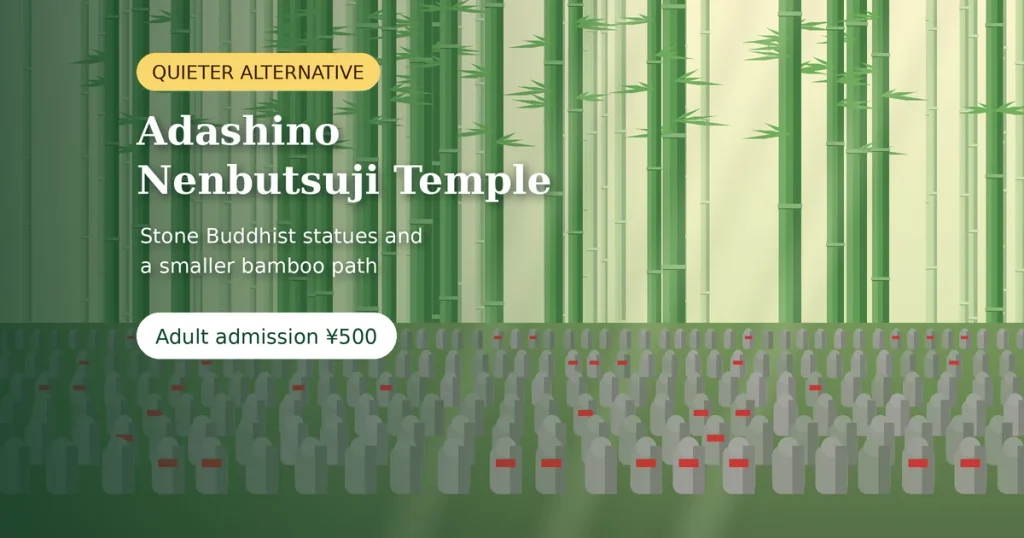
If the main bamboo grove feels too crowded, consider Adashino Nenbutsuji Temple. It is farther north in the Sagano area and is known for its many stone Buddhist statues. A smaller bamboo path inside the grounds offers a different atmosphere.
The temple charges an entrance fee. Its official website lists adult admission at ¥500, with different rules for younger visitors. Opening times may change during winter or bad weather, so check the official temple website before going.
Is There a Bamboo Forest Light Show at Night?
The main grove does not have a permanent nightly light show. It is generally open around the clock as a public path, but it can be very dark after sunset. Walking there at night is not the best option for most visitors.
Seasonal illumination events may take place in the wider Arashiyama area. Dates and locations vary by event, so check official Kyoto tourism announcements before planning an evening visit.
Should You Take a Rickshaw Ride?
A rickshaw ride is a popular way to explore the Arashiyama district. Local drivers often share stories about the area and guide visitors through selected streets and scenic spots.
Prices depend on the route and ride duration. Some routes pass near the bamboo grove, but the exact path may vary. Ask the operator about the price, length, and route before paying.
Conclusion
The Kyoto bamboo forest is worth visiting if you plan around its crowds. Arrive early, walk slowly, and combine the grove with nearby gardens, temples, or the riverfront. This makes the trip more enjoyable than visiting the bamboo path alone.
If you want a quieter alternative, consider Adashino Nenbutsuji Temple. The grove itself is free, while nearby attractions charge separate fees. Check transport and opening times before you travel in 2026.
FAQs About the Kyoto Bamboo Forest Worth Visiting
What Is the Most Famous Bamboo Forest in Japan?
The Arashiyama Bamboo Grove in Kyoto is one of Japan’s most famous bamboo forests. Its tall green stalks and narrow walking path attract visitors throughout the year.
Is the Bamboo Forest in Kyoto Worth Visiting?
Yes, especially if you enjoy nature and photography. Visit early to avoid the largest crowds and combine it with nearby attractions.
How Much Is the Kyoto Bamboo Forest?
The main public bamboo path is free to enter. Nearby places, including Tenryu-ji Temple, Adashino Nenbutsuji Temple, and the monkey park, charge separate admission fees.
How to Get to the Arashiyama Bamboo Forest?
Take the JR Sagano Line to Saga-Arashiyama Station and walk about 10 minutes. You can also use the Hankyu Railway or Keifuku Randen tram.